Volunteer with us Today!! We have various dates to choose from Jan 31st | Feb 1st | Feb 27th | Feb 28th | Mar 1st | Sign Up Today!

Texas Youth and Government

About Texas Youth and Government Youth and Government

This author has not yet filled in any details.
So far Texas Youth and Government Youth and Government has created 177 blog entries.

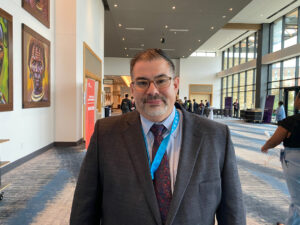
Volunteering at the YMCA: Tylen Blades

By Andrea Jimenez

Students in youth government immerse themselves in debate issues affecting citizens in their state, propose legislation, and engage in other civic discussions through the YMCA. The YMCA has the help of many volunteers that help make this possible. Tylen Blades, a YMCA volunteer of seven years, shares his experience of his first year of volunteering with Youth and Government.


After being asked why he volunteered this year, Mr. Blades responded with “My desire to explore the options that the YMCA has to offer.” After praising the talent of the members in all branches in the program, he expresses how eye opening his experience with the program has been. As a Youth and Government volunteer, Mr. Blades ensures that students arrive safely at their destinations, have all their required supplies, while he is there for any questions that may arise. He was then asked what his favorite part of being a volunteer was so far. Mr. Blades revealed that he works in youth development, which is something that he sees in a program like Youth and Government. He describes how Youth and Government pushes teens to go out of their comfort zone and try new things, and more specifically things that “Branch off topics that they are already interested in.” These delegates have the opportunity to connect with others and expand their knowledge through the various opportunities that Youth and Government provides.
Texas’ 77th Youth Lieutenant Governor

By Kenneth Pham

The YMCA’s Youth and Government program consists of many great opportunities and engaging activities that develop crucial skills for the young generation. Although this program can foster increased necessary abilities such as writing, public speaking, debating, and analysis, one of the most important skills that Youth and Government promotes is leadership. The 77th Texas Youth Lieutenant Governor, Ryan Lee, is a paradigm of these characteristics, especially leadership. Being the president of his own Youth and Government club at Glenda Dawson High School, he has become an inspiration to not only me but to the rest of his constituents that he is representing. Amongst all other qualities, leadership is an important trait that allows one to reach out to others through communication. In fact, according to Jerome Taillard, professor at Babson College in Massachusetts, “leadership listens, inspires, motivates, and gives a direction, a common goal to aspire to,” which emphasizes the importance of these traits. This allows connections between each team member, and in this case, Ryan can rally together his own district as well as delegates from other districts by being a great leader. However, he was not born with the impeccable skills of an inspirational leader. He states that “[his] first year of Youth and Government, I used to be one of the shy legislative delegates. But through this program I was able to boost my own confidence and leadership and I hope to instill these same principles in those that I lead.” The YG program has many different officer positions available, and the Lieutenant Governor usually has the responsibility of being the Chair for the Senate. Because of this important duty, the person carrying this out must display exceptional levels of leadership. Ryan Lee displays the qualities of what the Youth and Government program intends to imprint on its participants.

Sources:

College, B. (n.d.). Faculty profiles. Faculty Profiles | Babson College.
https://www.babson.edu/about/our-leaders-and-scholars/faculty-and-academicdivisions/faculty-profiles/jerome-taillard.php

– Interview with Lt. Governor Ryan Lee

Getting to Know Delegate Grace Hargrave

By: Lynette Huang

Grace Hargrave, a Senior at First Baptist Christian Academy, is a vibrant individual with a
passion for reading, playing instruments, cooking, traveling, and delving into history. This year
marked her debut in both mock trials and youth and government, sparked by the inspiration
drawn from her best friend’s years of participation in Youth and Government trials. Hesitant but
intrigued, Grace decided to give it a shot, motivated by the captivating nature of the trials. “I saw
how interesting it was, so I decided to see how I would like it,” she shared. As a first-year
participant, Grace assumed the role of a defense attorney for Alex Greene. The weight of her
questions became pivotal in determining the fate of the case, and she approached her
responsibilities with a mix of excitement and nerves. Reflecting on her journey in youth and
government, Grace recounted her best memory, highlighting the engaging debates over intricate
case details. “Getting into debates over how the gun was facing, who was correct, and other facts
in the case. Going over those details has been extremely interesting,” she recalled with
enthusiasm. One aspect she cherishes about the trial experience is its grounding in real-life
situations. Grace appreciates the opportunity to evaluate and consider how her generation can
enhance their responses and decisions in matters of democracy. Expressing her enthusiasm for
this year’s trial case, she finds excitement in witnessing the final verdict. Grace’s journey in Mock
Trial and Youth and Government not only showcases her diverse interests but also underscores the
value she places on understanding real-world scenarios and contributing to the growth and
improvement of democratic processes for the next generation. If she had another chance to attend
youth and government, then she would do this all over again. She regrets not participating in this
program earlier in her high school career.

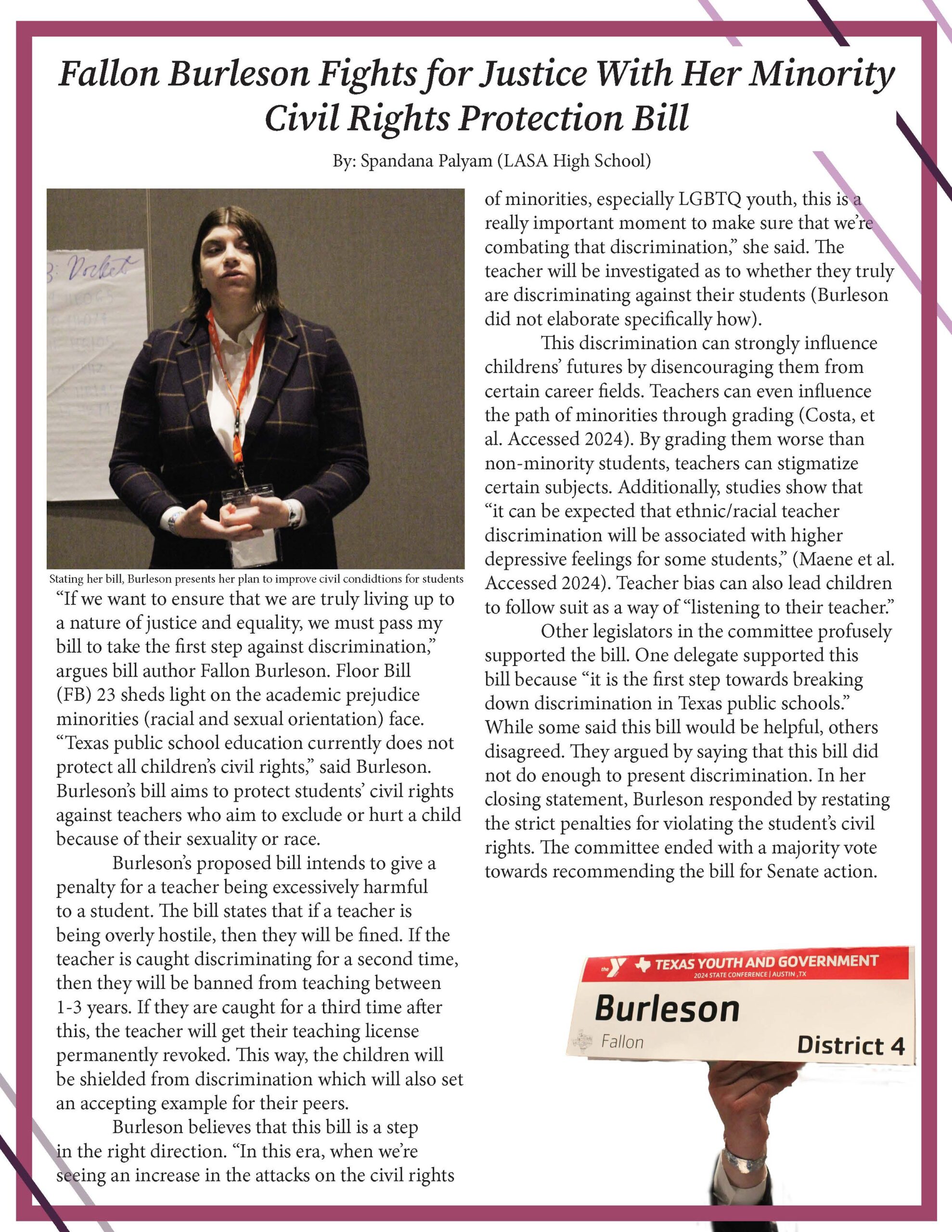
Fallon Burleson Fights for Justice With Minority Civil Rights Protection Bill

“If we want to ensure that we are truly living up to a nature of justice and equality, we must pass my bill to take the first step against discrimination,” argues bill author Fallon Burleson. Floor Bill (FB) 23 sheds light on the academic prejudice minorities (racial and sexual orientation) face. “Texas public school education currently does not protect all children’s civil rights,” said Burleson. Burleson’s bill aims to protect students’ civil rights against teachers who aim to exclude or hurt a child because of their sexuality or race. Burleson’s proposed bill intends to give a penalty for a teacher being excessively harmful to a student. The bill states that if a teacher is overly hostile, they will not be able to teach for one year. If the teacher is caught discriminating for a second time, then they will be banned from teaching for 3 years. If they are caught for a third time after this, the teacher will get their teaching license permanently revoked. This way, students will be shielded from discrimination, setting an accepting example for their peers.

Burleson believes that this bill is a step in the right direction. “In this era, when we’re seeing an increase in the attacks on the civil rights of minorities, especially LGBTQ youth, this is a really important moment to make sure that we’re combating that discrimination,” she said. The teacher will be investigated as to whether they truly discriminate against their students (Burleson did not elaborate specifically on how). This discrimination can strongly influence children’s futures by discouraging them from certain career fields. Teachers can even influence the path of minorities through grading (Costa, et al. Accessed 2024). By grading them worse than non-minority students, teachers can stigmatize certain subjects. Additionally, studies show that “it can be expected that ethnic/racial teacher discrimination will be associated with higher depressive feelings for some students,” (Maene et al. Accessed 2024). Teacher bias can also lead children to follow suit as a way of “listening to their teacher.”

Other legislators in the committee profusely supported the bill. One delegate endorsed this bill, because “it is the first step towards breaking down discrimination in Texas public schools.” While some said this bill would be helpful, some delegates disagreed. They argued that this bill did not do enough to present discrimination. In her closing statement, Burleson responded by restating the strict penalties for violating the student’s civil rights. The committee ended with a majority vote toward recommending the bill for Senate action.

By Spandana Palyam, Liberal Arts and Science Academy

Safety During Summer

By Elaine Carte-Engel

Upon passage in the Senate, Senate Bill 21 was brought to debate in the House. Senate Bill 21, authored by Delegate Elliot Copeland, is an act aimed at increasing the safety of labor conducted in the heat, “as well as declaring an emergency”, regarding rising temperatures.

If temperatures reach over 90 degrees Fahrenheit, the bill requires employers to keep “a functioning instrument that is capable of measuring the temperature” on site and available any time when heat related illness is a risk to workers. Employers are also required to provide eight ounces of water every 20 minutes and breaks in a cooled area every hour. Employers who fail to meet these standards will face criminal charges.

Delegate Jiya Sharma served as the sponsor of the bill in the House, where she read a speech written by Copeland. “Without protections, worker’s lives are at risk.” Sharma said, “Across the United States, since 2011 over 400 workers have died due to heat related illness, with around one tenth of them dying here in Texas.”

Sharma believes strongly in the bill she is sponsoring, hoping that it will serve as a vital front line in protecting workers facing continually rising temperatures.

“It’s trying to protect the workers, to protect the people,” Sharma said. While in the house, concerns were raised that the required regulations would stunt productivity and have a negative effect on the economy. To rectify this, an amendment was added stating that the mandatory breaks were not to exceed 15 minutes.

Further concerns were brought up that the bill allowed loopholes, such as no minimum break time, that would render it ineffective. The example of a ‘one second break’ was frequently used in opposition speeches.

“It’s about the intent of the bill. It may have some loose ends but those can be tied up through amendments,” Delegate Theodore Nguyen said.

Despite the issues raised in the debate, Sajid voted for the bill in its passage into law.

“I love how it’s working towards helping employees live in viable conditions while working and making sure they are not hurt because of part of their job,” said delegate Fatimah Sajid.

Sharma was proud when the bill she sponsored for Copeland passed and the team was able to ensure further protections for Texan laborers.

“It’s not slavery, it’s employment, You should be able to have breaks; you should be able to have water breaks and have livable conditions,” Sharma said.

Media in Y.A.G

Media’s Current Status

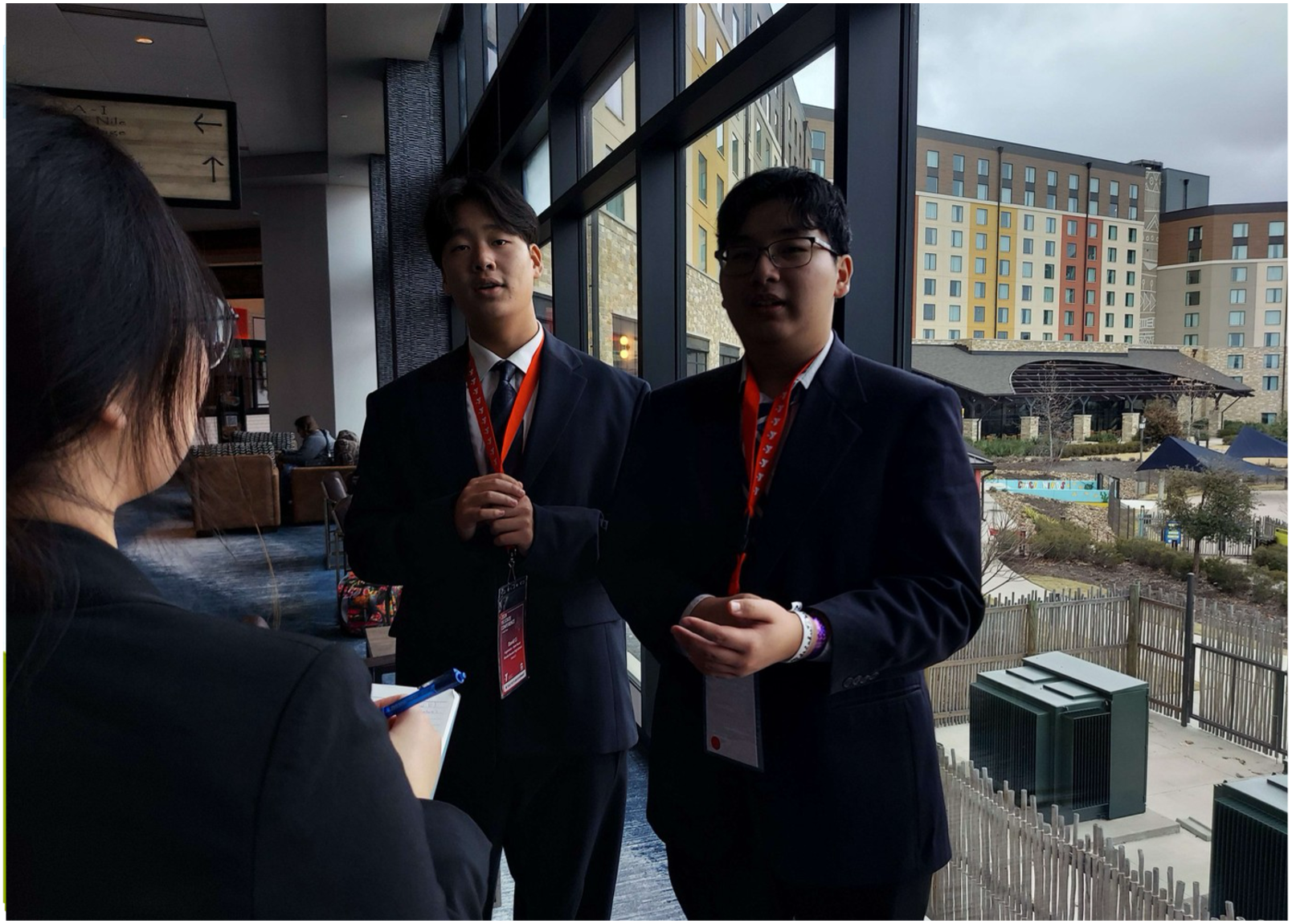
Youth and Government (Y.A.G) is currently in Austin, Texas, for the state competition! Each branch, Judicial, Legislative, and Media, is separated into sections to compete against one another. While the judicial and legislative branches are in their sessions, the media team travels from session to session to keep up with the status of each branch. Depending on which branch the reporters decide to take on, they will guide their way to their goal. When it comes to location, Media reporters have access to any room and are allowed to take photos at any given moment. Most people in this club will likely be at the Capitol of Austin or Austin Community College.

How Does The Media Section Travel?

It’s nothing special; the Media members just tag along without being too noticeable. Once the reporter has gotten to the correct location, they journal and take notes on their centered topic. One of the most important factors of being a Media member, is to be a good listener and observer. Writing good stories, documents, infographics, publications, social media posts, or news broadcasts is necessary. Unlike other branches, Media’s section is extremely broad. Media reporters can quite literally write about anything, as long as it’s still keeping up with the current status of certain sections. Reporters work on their assignments during the day at many locations across Austin. An example of the media’s section task is asking to interview delegates. Reporters will interview delegates and ask them questions about their house, why they chose it, their goals, and their biggest challenge while being at state. After the reporter has gotten the information they need, they will set their goal into motion. Although it may not seem like it, Media plays a big role in Y.A.G. Without it, nobody would know what’s going on at any given point.

Written by: Emma Hoang, Glenda Dawson Highschool

The way in which delegates face their problem

By Mia Godoy

Delegates have many roles they need to adapt to, meaning they need to have a great community around them to help them get through difficulties or problems they may have while trying to adapt to the roles to lead them here to State today. A Delegate here today by the name of Emily Moore gave a little information about how she got here to the State Conference and the community that helped her get through it all. “The main thing that helped me get to state the most was my team,” Moore said. This exemplifies that having a competitive group of Delegates that you can rely on will get you to maintain high standards at the best of your work. A Supportive team will always help get through all the rough times but will also help you get to greater places as for today as an example. The meaning of having support around you is to worry less about the problems and for emotional reasons. “Having the support of my team also helped me get to state,” Moore said. Moore stating this helps us understand the meaning of support more by giving us more time to get through the difficulties of getting prepared for the many roles of being a Delegate. Being a Delegate also needs resources to help you throughout the process of being where you are today. The biggest resource people need is their community. “Having a big school that had a lot of other people in Mock Trial helped me most with resources so that I could get ideas from other teams. We had so many people in both the Prosecutor and defense so I got to see so many different sides of it from many different people,” Moore said. This explanation Moore gave was both inspirational by helping us realize what we need most to help us get to where we want to be. Delegates are all around today showing us the best of them but they truly wouldn’t be able to without the help of their community.

Advocating For Advocates

REVEALING THE IMPORTANCE OF OUR Y&G ADVISORS

A whopping 25,000 students participate annually in the growing youth organization Youth & Government, with over 1000 students in Texas alone. The club’s functions prove to be engaging for attending students and adults, recreational regardless of their academic benefits, and flow smoothly despite following a loaded schedule. Although students’ model behavior and proficient efforts at improving their skills play some part in allowing Y&G functions to run placidly, they aren’t the only force at hand. Despite their major role within the organization and the countless lives they’ve permanently impacted, advisors are often overlooked and underappreciated. Agreed upon by many, Youth and Government would not be the same without these key players.

In an interview with Veterans Memorial HS advisor Aaron Williams, he reveals, “Youth and Government teaches you to understand that everyone is different, people have different mindsets. And [it] teaches comradery and research…they can apply this in everyday life.” “As far as students, everything is a success story. When you come here and experience something like this, www.ymcatexasy.org 1 meet others with different backgrounds, that’s a success”. Mr. Williams has been an advisor for 5 years and plans to continue reaching out to students and creating a generation familiar with government. The interview reveals the significance of advisors to our future senators, legislatures, governors, and various other members.

Robbert Root, advisor and coordinator of Holmes High School, shares his student Nathan Swick’s success story: “He was one of the outstanding legislatures. To me, the great picture was watching this young African American male speak at the same place as all the speakers of the senate have spoken and the pride that arose from him”. Mr.Root proves to be a working example of the importance these teachers hold to our youth and the boundless effect they have on their pupils.

Mr. Root recruits students to Y&G by “…[giving] the kids a voice so they can be empowered, and help them recognize their voice is important and what they say is important”. He emphasizes the magnitude of involved and active youth and their representation. Mr.Root, Mr.Williams, and advisors across the globe prove to be the characterization of the club.

San Antonio district director Angelica Torres describes the importance of advisors by stating, “The support for our students, they are those mentors, those leaders, that can vouch for them. They’re advocates there for them every single day. So for me, they’re the face of Youth & Government.” Ms. Torres gushes on about the gravity and weight of an advisory role and acknowledges the transformative and knowledgeable work of these adults. Youth & government owe our advisors long-due appreciation. Without their aid, the art of government would present itself as a persistent obstacle to future generations.

Written by: Amina Ahmed, Foy H Moody High School

Should Texas increase labor regulations regarding heat caused by Global Warming?

By Elan Rodriguez

Over the past ten years, the hottest month’s average temperature has risen nearly 7 degrees which to some may not seem like a big change, but for many people that have a job where they work outside it is a major transition for them. The people who are possibly most affected by this new heat wave are construction workers, the people who quite literally built our country. This new bill is made to help protect our construction workers in the hottest times of the year. The basics of the bill are that environmental heat is the combined heat of air temperature, humidity, radiant heat, and air movement. This bill will also require employers to maintain and utilize an instrument capable of measuring environmental heat such as a thermometer. And that an employee must be provided eight ounces of water at least every 20 minutes during the time they are working. To some people, this bill could cause major delays in construction that could cost companies more money than they intended. However, according to the author of the bill delays would be minimal and they intend to pass this bill for the safety of the workers.

Each year about 1,670 people die every year due to heat stroke complications. Many of those being construction workers. Although this bill is important and has many benefits there are still some gray areas that need to be addressed. For example, it was never specified in the bill what temperature would be considered extreme heat. Without a set temperature employers can argue that they couldn’t consider a certain temperature extreme enough. Another thing that needs to be addressed is that the act shall take place in 90 days which doesn’t seem like much but as many Texans know our weather can change drastically from day to day. If this act does not immediately take effect we could have many more heat stroke deaths.

A Day in the Life of a Youth and Government Media Member

By Elan Rodriguez

To start this off, this is only my first year in the YMCA Youth and Government program. Back in September of last year, me and my friends decided to sign up to participate in the Youth and Government club at our school – we chose to do media. I wanted to be part of this club because things like this have always interested me. We went on to compete at the district conference and we were able to move forward to state. After all of that, now we’re here.

We arrived at Kalahari at about 1:30 pm on Thursday and sat through the opening ceremonies. After that we were able to go to our rooms to sit back for a bit, before going to the arcade and having some fun. We got back to our rooms at around 10 pm and showered to go to bed. This morning we decided we wanted to go to the State Capital to watch some of the legislative sessions. As I was sitting in the courtroom watching and listening I was also writing notes and things that would go well in my media report. After I wrote my first report I couldn’t think of anything else that wasn’t similar to what I had already written. After some thinking I decided to just write about the experience of being here and hearing all the debating over the different bills. I listened to many different bills, some about worker safety and others about classroom safety. One of my favorite ones was about the safety of construction workers in extreme heat. Overall This was a very enjoyable experience and I am looking forward to the coming days where I will do much more.

Go to Top