The Forgotten Section: Moot Court
By Eliza Pepito
A Dive Into Appellate Court: A Section Often Overlooked
Just as any student who has gone through the US education system should have learned, the First Amendment found in the US Constitution includes the right to freedom of religion. However, if this guaranteed freedom were to be supposedly broken, what would happen?
Well, such a situation in the aforementioned is under investigation in the courts of the Judicial Branch at the Texas YG State Conference. The Appellate Court, the court that addresses appeals (when a party claims that an error was made in the trial court case and calls another court to correct that error), has been tackling the case of Elijah Casey.
Casey, a father and dedicated member of a fictitious religious group (the First Church of the Divine Healing of Our Lord), has decided to decline his daughter the opportunity of medical care due to his faith’s belief in the power of prayer (and prayer alone) to cure diseases and illnesses. Due to Mr. Casey’s choice, his daughter Elizabeth ends up passing away due to a treatable disease, diabetes.
Although Casey had been found not guilty of Second Degree Manslaughter, he did end up being convicted, in the court of trial, for Second Degree Injury to a Child. Consequently, Casey has decided to appeal his conviction over two issues: whether the search warrant used to convict him was improperly issued and whether Casey’s right to freedom of religion had been violated. The intricate and delicate case has forced many delegates to thoroughly study and memorize, inside and out, every little detail and nuance associated with the suit.
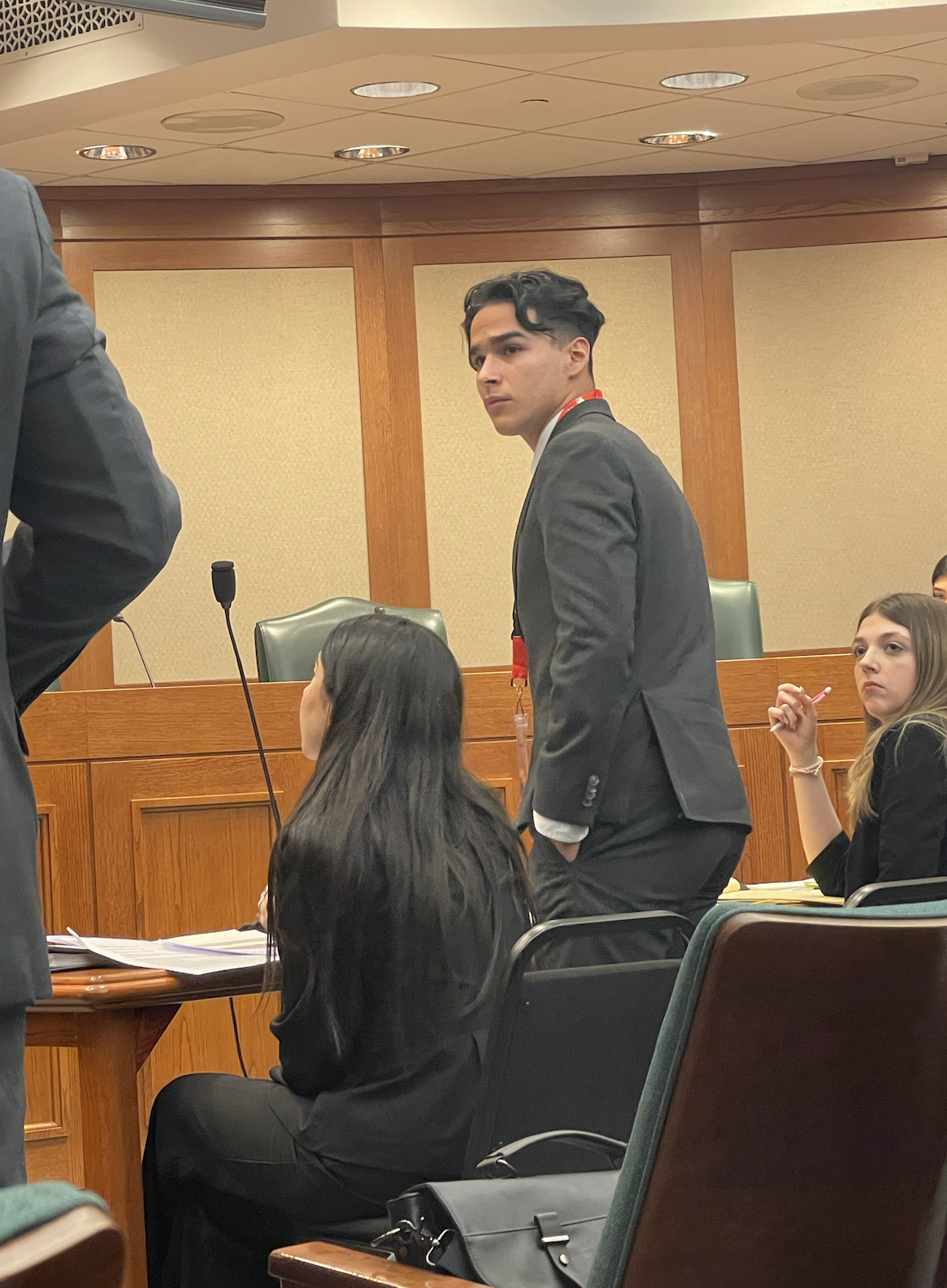
According to Appellate attorney Daeun Kim from Creekview High School, the easiest aspect of this otherwise complicated case is that, in being required to argue for both sides of the case, she is “better prepared” and knows what to expect for a counter-argument from the “other side.” Consequently, she can garner the case and its overall issues from a more neutral, “wider perspective.”
Despite this, however, Kim conveys that she still finds attempting to devise an efficient and strong rebuttal to certain counter-arguments the “hardest aspect” of this case, given the complexity of the situation.
In such complex cases, a judge’s role of maintaining neutrality and tackling the case with objectivity is of the utmost importance. For example, Appeals Court Judge and Chief of Justice Candidate, Cindy Ren, expresses the aforesaid attitude. Ren states that, as a judge, she can “see where both sides are coming from” and can only “look forward to hearing more” from each side before coming to a verdict.
Casey’s case truly encapsulates the complexity of our modern world. While society continues to advance and progress, many still choose to stick to and conserve tradition because of comfortability, even if doing such causes harm to others.
With the nature of this case centered around the threat of progression versus the threat of conservation, such a conflict can be and is very viable and applicable to our world today.