
Voices on the Floor: The Power of Student-Led Debate
By Dorcas Owala
John Marshall Law and Medical Services High School
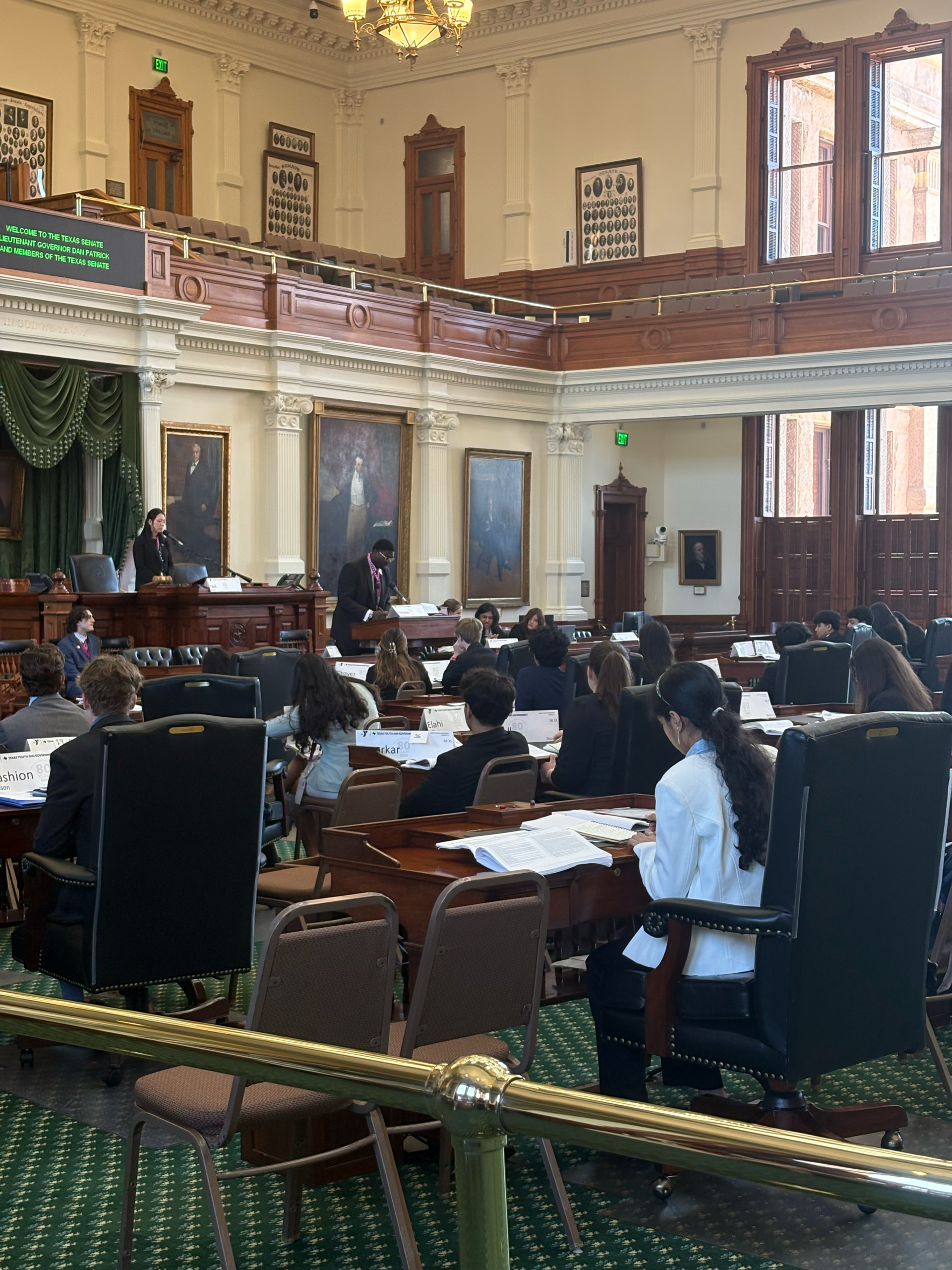
Legislative delegate placing his argument on his bill as delegates write down notes on what their argument will depict.
From the gallery above, the scene looked like any official legislative session — until you realized every lawmaker on the floor was a high school delegate. At the Capitol Building, YG YMCA legislative delegates start their debate inside Senate chambers. In this building, the delegates debate mock legislation in a process that closely mirrors the process of the Texas Legislature. “Ne!”, “Aie!”, “State your motion,” Proponent and Opponent slips, Amendments, “Yield time to chair,” two-minute opening, etc. These procedures not only keep the debate in order, but they depict real-life legislative debates in Texas.
The Legislative section involves participants identifying issues for legislation. Bill writing, debating, bill presentation, and participation in a legislative body are the main jobs of a legislature. For many delegates, the moment was about more than winning a vote. It was about learning how to articulate ideas under pressure, listen to opposing viewpoints, and engage respectfully in disagreement. Parliamentary procedure shaped each exchange, ensuring order while encouraging conviction.
Inside the historic chamber, debate was not symbolic. It was structured, strategic, and deeply personal. Delegates rose to defend proposals addressing real-world issues — from mental health funding to education reform — citing statistics, responding to cross-examination, and negotiating amendments. The portraits lining the walls served as a reminder of past lawmakers, but on this day, the responsibility of governance rested with students determined to make their voices heard.
Legislator’s Mind
Wenzel, a legislative delegate, says, “I think it’s really interesting because there’s such a diverse amount of bills, some covering agriculture life, classrooms, and other things. The hardest thing was going up and speaking because my mind goes completely blank. Being out there and talking to me and other fellow delegates is really refreshing to know that everyone’s been in that position and I can relax and keep going.” For many delegates, the chamber floor transforms into a classroom without walls — one where leadership was tested not by grades, but by courage and leadership.
As debate concluded and votes were cast, one truth became clear: the power of student-led government lies not only in the legislation passed, but in the confidence built, the empathy developed, and the civic responsibility awakened. All of the legislatures do have to keep in mind the procedures as a legislature. Another leg delegate says, “Since I’ve been doing it for so long, it’s kind of become muscle memory. You just have to be present with the debate that’s going on and be aware of what the delegates’ needs are. Really just make sure that you’re moving at the right pace.” Delegates listened carefully, they scribbled notes to prepare their debate pros, cons, and amendment debates.
Finality
As votes fill up the room with Ne’s and Aie’s on bill decisions, delegates lead the debate with respect, dialogue, professionalism, and hope that one day the practice will be put into play.
For some, this was their first time speaking publicly in front of their peers. For others, it was a preparation for future careers in law, politics, or advocacy. But for all, it was a lesson in civic responsibility: democracy is not passive.
Beneath the beautifully sculpted historic building, the most powerful thing in the chamber was not the gavel, it was the voice. The voices of all youth delegates who not only care about democracy but of the world. The world where they will be the change and voice of America.