
District Wide “Takeover” to Test Reformation: How Students Challenge and Overcome their Struggles through Policy.
By: Mercy Otieno
James W. Martin High School
In June of 2023, all Houston Independent School District (ISD) was taken over by the Texas Education Agency due to “unacceptable ratings” from Phillis Wheatley High School for seven consecutive years, due to a HB 1842, which underwent the same process as YG bills. With the “take-over”, all 254 schools have felt its effect.
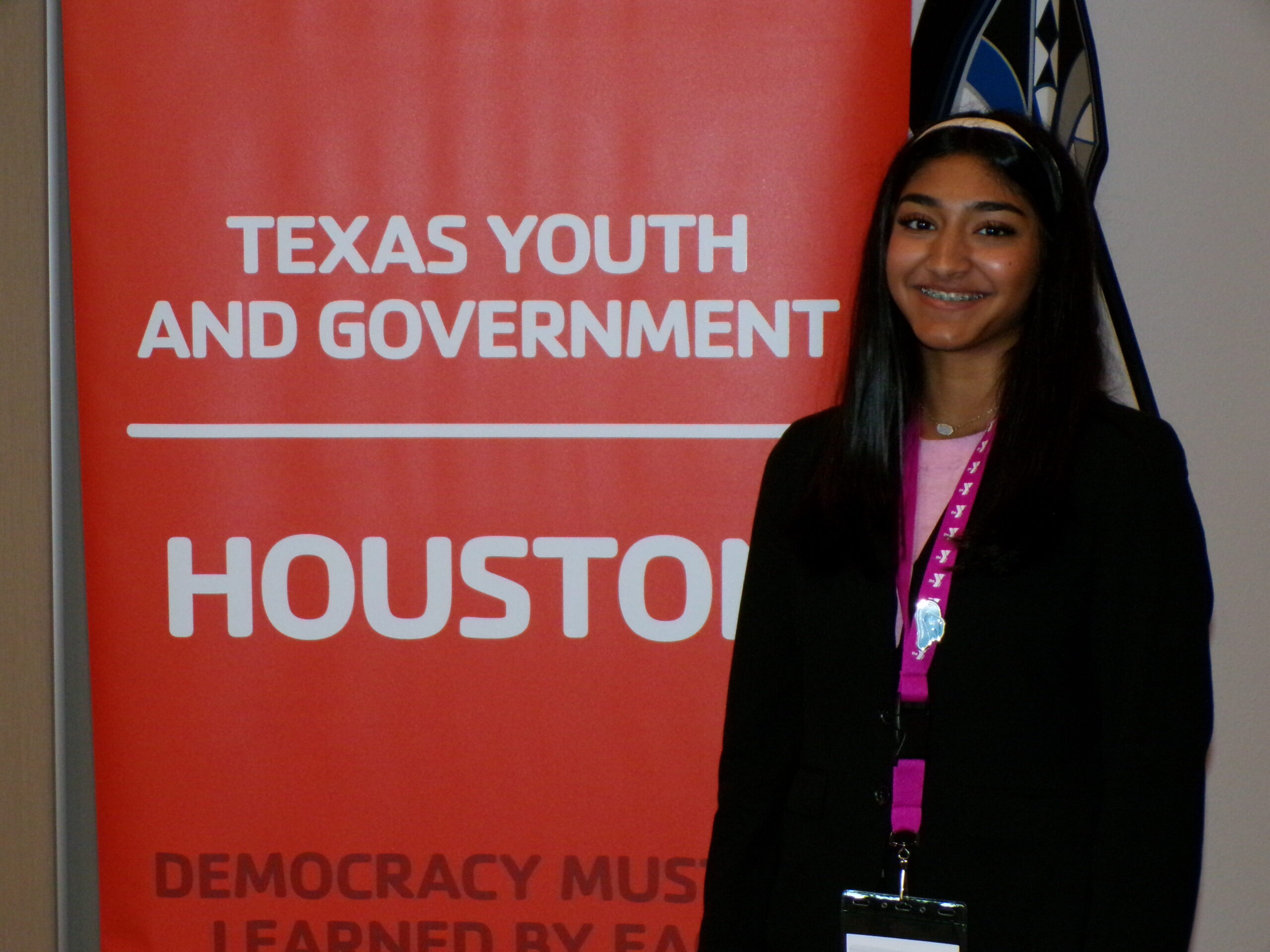
Here, at the 79th Youth and Government State Conference, delegates such as Bahviya Dande from the Greater Houston District, addresses educational concerns rooted from and inspired by experiences that have made her, and those around hers, educational careers more difficult.
Dande’s SB26 is titled, “An Act banning the use of state-mandated standardized testing in Texas public schools and declaring an emergency.”
“Most people, [towards the end of the school year], just stop trying, and I feel like that just kind of reduces the point of having the [ [State of Texas Assessments of Academics Readiness] test,” Dande said. “If no one is even going to try on it, then why test people?”
Teachers, such as Jennifer Payne, although not agreeing with completely abolishing the concept of standardized testing, still agree that it is past due for the system’s reform.
“The state tests should be written at a level that’s easier for kids to understand,” Algebra 1 teacher Jennifer Payne said. “Like, I don’t think that at 50%, they should be getting full credit, or if you’re going to make it that, the test could be more reflective of, like, an AP test, where there’s a free response component, so that you can actually see that they’re working.
By passing her bill, Dande works to benefit students across the state.
“It’ll help students have less pressure on themselves,” Dande said. “Students have, like, AP tests coming up, especially in high school, normal finals, and there’s a bunch of tests. So, I feel like it reduces the pressure, and, the amount of effort that they have to put in studying for the STAAR test.”
Bhaviya Dande herself identifies as someone that stresses immensely over the test, which is another reason as to why she wrote on it.
“Growing up, I had so much text anxiety, especially when it came down to the STAAR test,” Dande said. “I personally always struggle with science, and I feel like the science STAAR test always really made me feel so bad about my, like, science abilities, [and] feel like I was worse than I already was.”
However, despite her difficulties in science, she still excelled in various other subjects, demonstrating all around towards other students that weaknesses do not define you.
“I feel like I really try to nail down and become better at other things, so I feel like math and English, I feel like I always focus on them more than other subjects, and I try to get really, really good at them,” Dande said. “Whenever you know you’re bad at something, you try really hard to get good at something.”
SB15 also plans to redirect the money towards students’ cyberbullying resources.
“Starting from a younger age, [students] face so much with how social media is today, whether it be a rude comment or snide comment on an Instagram or TikTok post,” Dande said. “Kids don’t understand how cyberbullying can affect other people. I feel like the correct resources and the correct funding can provide resources, programs, or like, initiatives to educate kids.”
Bahviya, as well as many of her friends, have all dealt with cyberbullying issues and through her bill, Dande addresses and challenges systemic issues she has dealt with in order to prevent them from recurring to other youth throughout the state of Texas.
“Sometimes you have to be the first person to do something, otherwise there won’t be any change in your life,” Dande said. “I think it’s really important to, like, take advantage of any opportunity that you can to make change. If you don’t like something, then I feel like you can do everything in your ability to fix it.”