By: Aubrey Rey
Stephen F Austin HIgh
November 14, 2026 at 12:00 p.m. CST
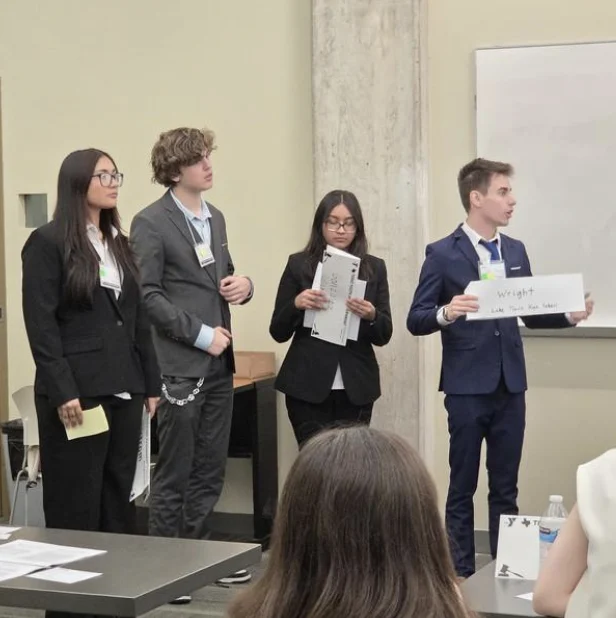
Austin, TX – At a Youth and Government Conference on Saturday, November 14th 2026, Proposal 4, made and read by SAF member Kahlo DiTullio. Who rules our schools? The TEA, short for Texas Education Agency, is a state agency that oversees the activities and programs of public schools all over Texas. The head of the TEA is called the Commissioner of Education and is elected by the Governor at the time. The Commissioner of Education is backed by a hierarchy of staff who are chosen directly by the TEA Commissioner themselves. The TEA works closely with two other organizations called SBOE (short for State Board of Education), and SBEC (State Board for Educator Certification).
Unlike the TEA, the State Board of Education consists of 15 members elected and representing different regions of the state, the Governor then from the 15 elected members chooses a chair of board.
Kahlo DiTullio, Austin High Delegation made a proposal to change this overpowering election of officials.
Kahlo DiTullio argued “The focus of TEA is not to improve our education at all, but to further the political regimes of whoever happens to be in power”. This proposal is suggesting that the TEA Commissioner of Education should be voted on by the regionally elected State Board of Education using a two-thirds majority, instead of being chosen by the Governor alone.
This change is made in hopes that the wants and needs of the people are the main focus, rather than the Governor’s interests. SAF members worry that the State Board of Education is just as politically aligned as the Governor may be and will struggle to vote on the TEA Commissioner using the two-thirds majority rule. This is due to the fact that the State Board of Education are elected by regions that may radically differ in political alignments. This is addressed to be “Highly unlikely” and the State Board of Education is said to be more prone to compromise and less prone to be driven by political agendas because of their educational teaching backgrounds. According to Kahlo DiTullio “They are teachers, they are from education… they are a lot less polarized than the Governor”.
Other SAF members argue that this proposal is vital to ensure that our education system should be directed to benefit children’s creativity and learning rather than be completely overpowered by political subtext.
Now I must ask again, who rules our schools? Do you believe that our public schools need to be saved, or do you believe that they should be left alone?


Kahlo DiTullio
Committee Room 1 during Proposal speech 4