
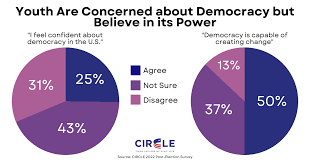
Graph of teens who are concerned about Democracy
Since 2015, trust in American Institutions has declined steadily among young people. In a study done by Harvard in November of 2025, only 13% of youth believe that the country is heading in the right direction. For many youth, the systems that are supposed to support them no longer feel stable. Even though many of these teens are not able to vote, over 60% of 13-17 year olds and 64% of 18-25 year olds worry about politics.
Many teens avoid having conversations about politics for fear of being “canceled”. Youths say that “cancel culture” seems to be an inescapable part of daily life, with this practice being especially present on social media. With the chance of public shaming and social exclusion, many youth do not feel safe sharing their views when it might differ from others. The impact of this cancel culture leaves teens with high amounts of social anxiety, depression, trust issues, low self-esteem, and even suicidal ideation.
Youth also have a concern for where their future is going. With issues like climate change, gun safety, housing cost, and global issues, youth do not feel as though the political system is meeting their needs.
Due to these fears of social consequences and lack of knowledge, most youth avoid politics altogether. But, when teens avoid politics, it gives them a sense of powerlessness, which is shown to increase anxiety.
So how should teens overcome the mental health struggle that comes with politics? Many studies point towards civic engagement by voting, volunteering, or jumping into political issues.
Volunteering gives youth a sense of purpose and the opportunity to be in something that is bigger than themselves. Volunteering releases dopamine, which is a hormone that is released when you do enjoyable or beneficial activities. Dopamine makes teens more relaxed and helps lower anxiety. Voting has a direct effect on public policy. For youth, the knowledge that they had a part of what happens in their community, state, and country can help settle their anxiety and a fear of the unknown.
Instead of letting politics become a source of anxiety, youth can choose to make it a source of purpose. When teens volunteer, debate, advocate, and vote, they are not just shaping policy. They are shaping their own confidence. The future feels less frightening when you are actively building it.
Laney Morgan