Volunteer with us Today!! We have various dates to choose from Jan 31st | Feb 1st | Feb 27th | Feb 28th | Mar 1st | Sign Up Today!

YG State Conference

What is Media, Really?

A Need-to-Know Basis of the Youth and Government’s Media Section

At a typical Texas Youth and Government State Conference, one can find students in legislative, state affairs, judicial, and less commonly known media. This section only takes 50 students from all districts to the state conference. Despite being one of four sections, not many people know about the section or what it does. In the real world, however, the media plays a huge role in connecting people to the government. An aspect that the Youth and Government attempt to model.

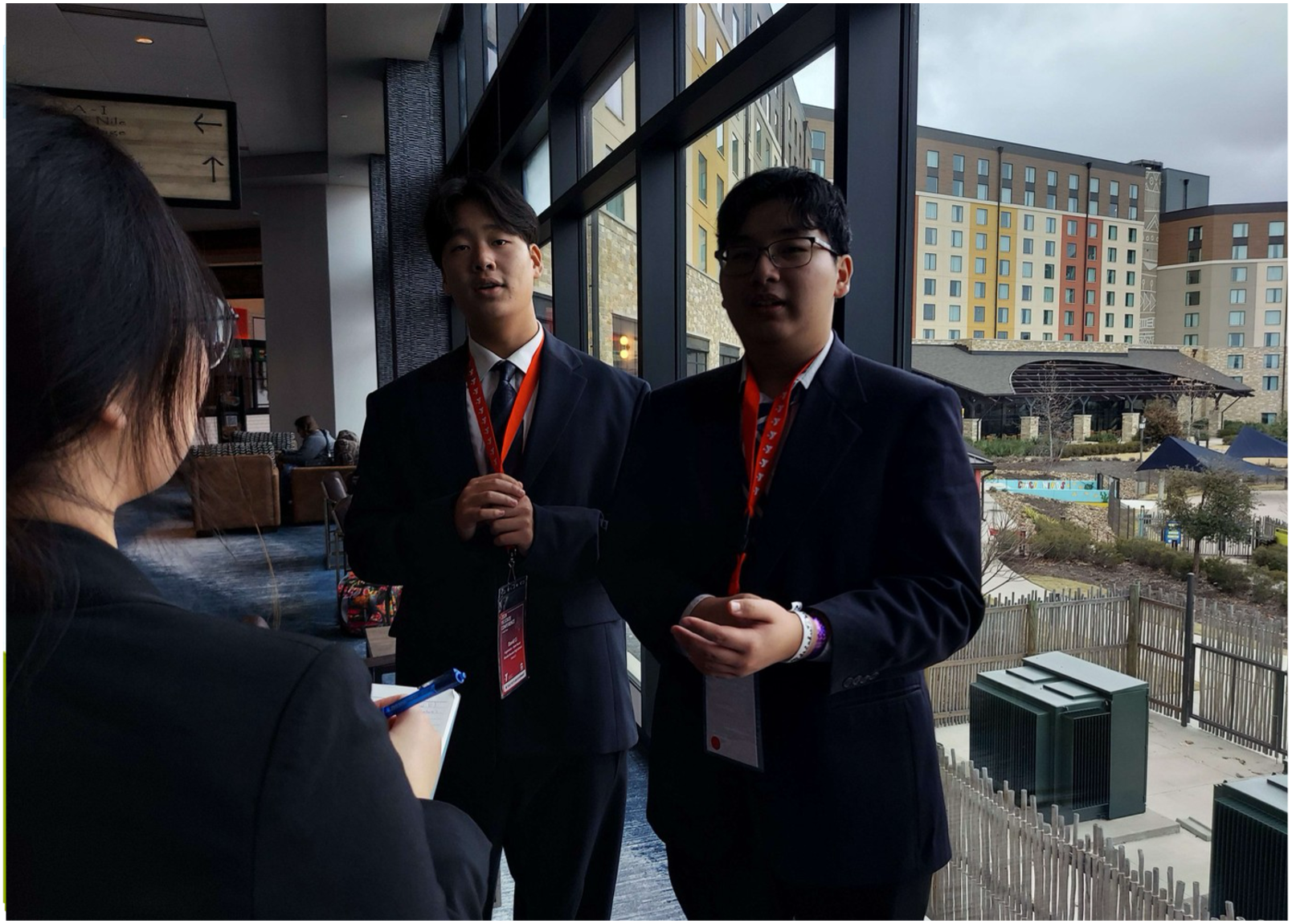
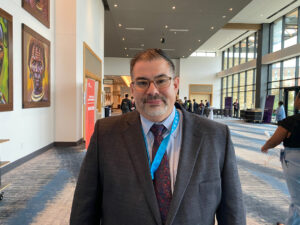
According to Ishmael Behrhorst, the senior director for marketing at the YMCA, media was the last section to be added to YG after it was founded. He states in an interview that media “is the balance to be able to tell stories of everything that’s happening at the conference while also replicating what happens every day in real life.” Activities include writing news-report-like stories, creating social media posts, and photographing delegates. Students have the freedom to “use their creativity, art, video skills, and even their human to be able to tell the stories that really matter and affect us daily.”
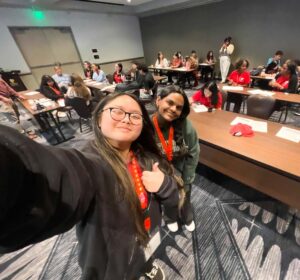
The media section has transformed throughout the years. Assignments from the previous year’s state conference differ significantly from the current ones. Esmerelda Rios, a media co-editor-in-chief, says, “Social media used to be a newer concept that not everyone was sure about. But with time, we have come to see how integrated media is in our society and politics and how it can help inform audiences. This is definitely reflected in the changes made to the YG media section because it is now reflecting real-world media to actively engage and inform people.” As the world undergoes constant change, the Youth and Government media section stands ready to adapt.
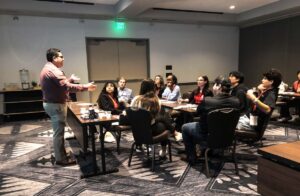
This section has done a lot for its students. For Gracie Harding, a media co-editor-in-chief, media has “helped her photography skills tremendously.” For Rios, it is a “tool to help her reach her goals.” As much as media changes based on the world’s evolving trends, the section should also cater to the needs of its students. Harding expresses discontent on the section’s news articles, she says she “would like to make it more visual based and interactive. When the target audience is our generation and our participants, let’s be honest, after a long day of trials and submitting bills, students would rather skim an article than read it.” Every year, the media section enhances the YG experience, ensuring it stays informative and engaging for all generations. It’s always keeping on track to meet the evolving world and its student needs, offering a truly immersive journey.

By: Medha Rapuri
A day at YG

By Benjamin Wise

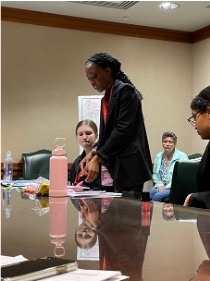
My name is Benjamin Wise and I will be writing about the bills that I heard about in court today. Today, I went to the Texas State Capitol in Austin, Texas. Inside the Capitol, there are many different places. The place I went to is in the Senate chamber where they pass bills. When I first got here, to the Senate chamber in the Capitol, they were talking about a bill they wanted to pass for people who work outside to keep them from overheating. One of the main things about this bill is that they wanted thermometers on the job site to measure the heat and also to have water on the site just to keep people from overheating and mandatory breaks for work to keep them from overheating and if workers don’t get this then the company will be fined with a class C misdemeanor. They also wanted small cups of water for the workers to drink whenever they got too hot. Also, they said that they could get water bottles but right now they get small cups for their mandatory break. The person passing the bill wanted a 20-minute break for the workers because that was enough time for them to cool down and drink some water. The author of the bill said that above 90 degrees is considered extreme heat and that that’s enough to take a break. However, someone countered him and said that they think 90 degrees isn’t too much and that workers can still overheat at around 80°. When they voted for the bill it did not pass the first time but Second vote when they did a recount the bill passed.

The second bill they talked about was about circumcision. The author of the bill said that Jewish babies should be allowed to be circumcised. Many people did not agree with him. They said that being circumcised can lead to many sexual diseases and normal diseases as well. However, the author said that being circumcised gives you benefits. Another argument they had is that babies can’t give consent to have circumcisions and they said that once you turn 18 you should be able to choose if you want to get circumcised. The bill did not pass.

For the third and final bill, the author proposed that all private and public school teachers must be first aid and CPR certified. One of their arguments was that when professionals arrive to try and save a student who has something wrong with them it could be too late for that child and a teacher who is first aid or CPR satisfied could save peoples lives. They said that it is a situation you would not want to be in but if it does happen it’s always good to be prepared. The bill didn’t pass.

Prosecution Attorney Brooke Desir

A Look Into a Texas YG Attorney’s Life

What is a prosecution attorney, and what do they do? Cornell Law defines this as “an attorney elected or appointed by local government officials to represent the state in a criminal case brought in a judicial district or designated county.” Prosecution attorneys are the people who go against the person who has been charged with violating the law. Brooke Desir is a student at Saginaw High School in Texas and a prosecuting attorney in the Judicial section of the YMCA Texas Youth and Government program. This year’s case is about a police officer who shot and killed a woman who he mistook for an armed burglar while investigating her house with his partner. The prosecution had to prove that the officer had the intent to kill.

The prosecution has to meet the burden of proof, which Desir describes as “proof beyond any reasonable doubt.” She says this is the hardest part of being a prosecuting attorney “because you can have all this emotion and stuff, but if you can’t actually meet the law, that’s kind of where the law in mock trial plays in.”

Mock trial involves a lot of teamwork with your fellow attorneys and your witnesses. Being able to work together with people and cooperating with your team is a must if you want to do well during the trial.

Brooke Desir and her team work amazingly together, and, according to Desir, they are always trying to come up with new ways to prove [their] case.” Desir first looks at the law, and based off of the law, she sees what she can use to make it work in her favor. She specifically loves using figurative language to make their case more emotional and compelling, appealing to people’s emotions to sway them to her side. In the days leading up to the trial, Desir and her team ran through the entirety of their case at least once a day, every day. The team’s attorneys and witnesses must memorize everything about the case and what they have to do and say. Whether someone wins or loses their trial isn’t a big deal in the Judicial section, as everyone is criticized and praised by both the judge and evaluator. In the end, though, Desir says, “When you like what you do, it’s really easy to do it.”

Written By: Edy Wang, LASA

Exploring the Intersection of Law: The Mock Trial Program

By Eliana Balderas

In the dynamic world of Youth and Government, one program stands out for its unique blend of legal education, advocacy, and public speaking prowess- the Mock Trial Program. Designed to stimulate real courtroom proceedings, this immersive experience offers participants a firsthand glimpse into the intricacies of the legal system. There is a captivating realm of mock trials within the Youth and Government framework. “Honestly Mock Trial serves as a great outlet to be with my friends, not only this but challenges my thinking and helps me gain skills toward speaking, all the way to being argumentative,” Valentino Ortiz said. Through rigorous preparation, compelling arguments, and spirited courtroom debates, these young advocates emerge not only as champions of justice but also as empowered leaders. “Mock trial means family to me, not only am I able to portray the role as an attorney that has allowed me and my family to get a glimpse of my future career but it has given me a family of my own. Within the past months, I have spent more time with my team than with my actual family. Although there came times of stress and arguments we all had a clear goal which was to strive higher than any other team,” Leslie Contreras said. From mastering the art of case preparation to honing cross-examination techniques, the transformative impact of the mock trial program and invaluable skills instill the perfect skills for young leaders. “I joined a mock trial to fulfill my dreams of being in a courtroom as an attorney representing and defending victims. Although everything is simply a re-enactment of a real court case, it shows me what I will one day be looking at when I am facing a real trial,” Leslie Contreras said.

Texas’ 77th Youth Lieutenant Governor

By Kenneth Pham

The YMCA’s Youth and Government program consists of many great opportunities and engaging activities that develop crucial skills for the young generation. Although this program can foster increased necessary abilities such as writing, public speaking, debating, and analysis, one of the most important skills that Youth and Government promotes is leadership. The 77th Texas Youth Lieutenant Governor, Ryan Lee, is a paradigm of these characteristics, especially leadership. Being the president of his own Youth and Government club at Glenda Dawson High School, he has become an inspiration to not only me but to the rest of his constituents that he is representing. Amongst all other qualities, leadership is an important trait that allows one to reach out to others through communication. In fact, according to Jerome Taillard, professor at Babson College in Massachusetts, “leadership listens, inspires, motivates, and gives a direction, a common goal to aspire to,” which emphasizes the importance of these traits. This allows connections between each team member, and in this case, Ryan can rally together his own district as well as delegates from other districts by being a great leader. However, he was not born with the impeccable skills of an inspirational leader. He states that “[his] first year of Youth and Government, I used to be one of the shy legislative delegates. But through this program I was able to boost my own confidence and leadership and I hope to instill these same principles in those that I lead.” The YG program has many different officer positions available, and the Lieutenant Governor usually has the responsibility of being the Chair for the Senate. Because of this important duty, the person carrying this out must display exceptional levels of leadership. Ryan Lee displays the qualities of what the Youth and Government program intends to imprint on its participants.

Sources:

College, B. (n.d.). Faculty profiles. Faculty Profiles | Babson College.
https://www.babson.edu/about/our-leaders-and-scholars/faculty-and-academicdivisions/faculty-profiles/jerome-taillard.php

– Interview with Lt. Governor Ryan Lee

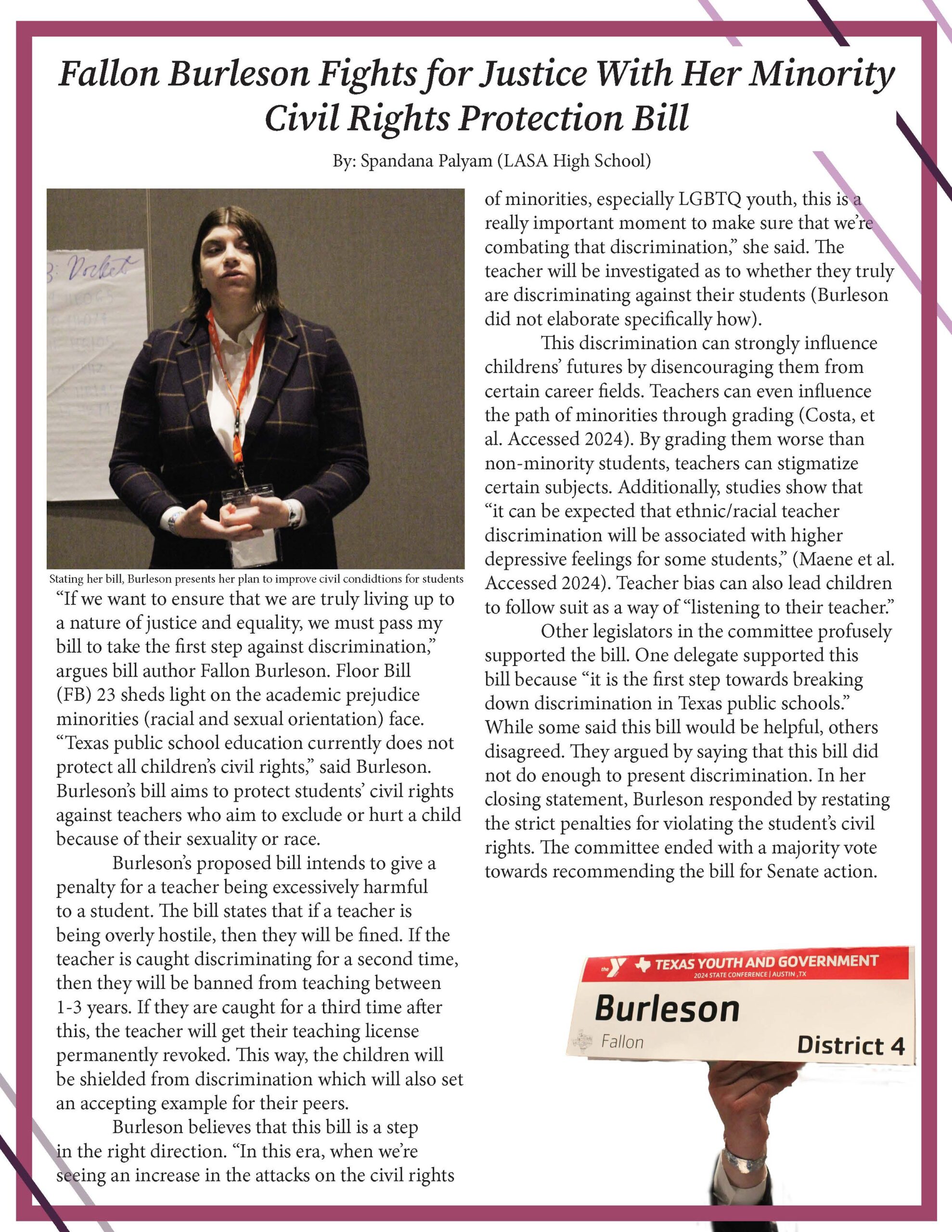
Fallon Burleson Fights for Justice With Minority Civil Rights Protection Bill

“If we want to ensure that we are truly living up to a nature of justice and equality, we must pass my bill to take the first step against discrimination,” argues bill author Fallon Burleson. Floor Bill (FB) 23 sheds light on the academic prejudice minorities (racial and sexual orientation) face. “Texas public school education currently does not protect all children’s civil rights,” said Burleson. Burleson’s bill aims to protect students’ civil rights against teachers who aim to exclude or hurt a child because of their sexuality or race. Burleson’s proposed bill intends to give a penalty for a teacher being excessively harmful to a student. The bill states that if a teacher is overly hostile, they will not be able to teach for one year. If the teacher is caught discriminating for a second time, then they will be banned from teaching for 3 years. If they are caught for a third time after this, the teacher will get their teaching license permanently revoked. This way, students will be shielded from discrimination, setting an accepting example for their peers.

Burleson believes that this bill is a step in the right direction. “In this era, when we’re seeing an increase in the attacks on the civil rights of minorities, especially LGBTQ youth, this is a really important moment to make sure that we’re combating that discrimination,” she said. The teacher will be investigated as to whether they truly discriminate against their students (Burleson did not elaborate specifically on how). This discrimination can strongly influence children’s futures by discouraging them from certain career fields. Teachers can even influence the path of minorities through grading (Costa, et al. Accessed 2024). By grading them worse than non-minority students, teachers can stigmatize certain subjects. Additionally, studies show that “it can be expected that ethnic/racial teacher discrimination will be associated with higher depressive feelings for some students,” (Maene et al. Accessed 2024). Teacher bias can also lead children to follow suit as a way of “listening to their teacher.”

Other legislators in the committee profusely supported the bill. One delegate endorsed this bill, because “it is the first step towards breaking down discrimination in Texas public schools.” While some said this bill would be helpful, some delegates disagreed. They argued that this bill did not do enough to present discrimination. In her closing statement, Burleson responded by restating the strict penalties for violating the student’s civil rights. The committee ended with a majority vote toward recommending the bill for Senate action.

By Spandana Palyam, Liberal Arts and Science Academy

Safety During Summer

By Elaine Carte-Engel

Upon passage in the Senate, Senate Bill 21 was brought to debate in the House. Senate Bill 21, authored by Delegate Elliot Copeland, is an act aimed at increasing the safety of labor conducted in the heat, “as well as declaring an emergency”, regarding rising temperatures.

If temperatures reach over 90 degrees Fahrenheit, the bill requires employers to keep “a functioning instrument that is capable of measuring the temperature” on site and available any time when heat related illness is a risk to workers. Employers are also required to provide eight ounces of water every 20 minutes and breaks in a cooled area every hour. Employers who fail to meet these standards will face criminal charges.

Delegate Jiya Sharma served as the sponsor of the bill in the House, where she read a speech written by Copeland. “Without protections, worker’s lives are at risk.” Sharma said, “Across the United States, since 2011 over 400 workers have died due to heat related illness, with around one tenth of them dying here in Texas.”

Sharma believes strongly in the bill she is sponsoring, hoping that it will serve as a vital front line in protecting workers facing continually rising temperatures.

“It’s trying to protect the workers, to protect the people,” Sharma said. While in the house, concerns were raised that the required regulations would stunt productivity and have a negative effect on the economy. To rectify this, an amendment was added stating that the mandatory breaks were not to exceed 15 minutes.

Further concerns were brought up that the bill allowed loopholes, such as no minimum break time, that would render it ineffective. The example of a ‘one second break’ was frequently used in opposition speeches.

“It’s about the intent of the bill. It may have some loose ends but those can be tied up through amendments,” Delegate Theodore Nguyen said.

Despite the issues raised in the debate, Sajid voted for the bill in its passage into law.

“I love how it’s working towards helping employees live in viable conditions while working and making sure they are not hurt because of part of their job,” said delegate Fatimah Sajid.

Sharma was proud when the bill she sponsored for Copeland passed and the team was able to ensure further protections for Texan laborers.

“It’s not slavery, it’s employment, You should be able to have breaks; you should be able to have water breaks and have livable conditions,” Sharma said.

Media in Y.A.G

Media’s Current Status

Youth and Government (Y.A.G) is currently in Austin, Texas, for the state competition! Each branch, Judicial, Legislative, and Media, is separated into sections to compete against one another. While the judicial and legislative branches are in their sessions, the media team travels from session to session to keep up with the status of each branch. Depending on which branch the reporters decide to take on, they will guide their way to their goal. When it comes to location, Media reporters have access to any room and are allowed to take photos at any given moment. Most people in this club will likely be at the Capitol of Austin or Austin Community College.

How Does The Media Section Travel?

It’s nothing special; the Media members just tag along without being too noticeable. Once the reporter has gotten to the correct location, they journal and take notes on their centered topic. One of the most important factors of being a Media member, is to be a good listener and observer. Writing good stories, documents, infographics, publications, social media posts, or news broadcasts is necessary. Unlike other branches, Media’s section is extremely broad. Media reporters can quite literally write about anything, as long as it’s still keeping up with the current status of certain sections. Reporters work on their assignments during the day at many locations across Austin. An example of the media’s section task is asking to interview delegates. Reporters will interview delegates and ask them questions about their house, why they chose it, their goals, and their biggest challenge while being at state. After the reporter has gotten the information they need, they will set their goal into motion. Although it may not seem like it, Media plays a big role in Y.A.G. Without it, nobody would know what’s going on at any given point.

Written by: Emma Hoang, Glenda Dawson Highschool

The way in which delegates face their problem

By Mia Godoy

Delegates have many roles they need to adapt to, meaning they need to have a great community around them to help them get through difficulties or problems they may have while trying to adapt to the roles to lead them here to State today. A Delegate here today by the name of Emily Moore gave a little information about how she got here to the State Conference and the community that helped her get through it all. “The main thing that helped me get to state the most was my team,” Moore said. This exemplifies that having a competitive group of Delegates that you can rely on will get you to maintain high standards at the best of your work. A Supportive team will always help get through all the rough times but will also help you get to greater places as for today as an example. The meaning of having support around you is to worry less about the problems and for emotional reasons. “Having the support of my team also helped me get to state,” Moore said. Moore stating this helps us understand the meaning of support more by giving us more time to get through the difficulties of getting prepared for the many roles of being a Delegate. Being a Delegate also needs resources to help you throughout the process of being where you are today. The biggest resource people need is their community. “Having a big school that had a lot of other people in Mock Trial helped me most with resources so that I could get ideas from other teams. We had so many people in both the Prosecutor and defense so I got to see so many different sides of it from many different people,” Moore said. This explanation Moore gave was both inspirational by helping us realize what we need most to help us get to where we want to be. Delegates are all around today showing us the best of them but they truly wouldn’t be able to without the help of their community.

Advocating For Advocates

REVEALING THE IMPORTANCE OF OUR Y&G ADVISORS

A whopping 25,000 students participate annually in the growing youth organization Youth & Government, with over 1000 students in Texas alone. The club’s functions prove to be engaging for attending students and adults, recreational regardless of their academic benefits, and flow smoothly despite following a loaded schedule. Although students’ model behavior and proficient efforts at improving their skills play some part in allowing Y&G functions to run placidly, they aren’t the only force at hand. Despite their major role within the organization and the countless lives they’ve permanently impacted, advisors are often overlooked and underappreciated. Agreed upon by many, Youth and Government would not be the same without these key players.

In an interview with Veterans Memorial HS advisor Aaron Williams, he reveals, “Youth and Government teaches you to understand that everyone is different, people have different mindsets. And [it] teaches comradery and research…they can apply this in everyday life.” “As far as students, everything is a success story. When you come here and experience something like this, www.ymcatexasy.org 1 meet others with different backgrounds, that’s a success”. Mr. Williams has been an advisor for 5 years and plans to continue reaching out to students and creating a generation familiar with government. The interview reveals the significance of advisors to our future senators, legislatures, governors, and various other members.

Robbert Root, advisor and coordinator of Holmes High School, shares his student Nathan Swick’s success story: “He was one of the outstanding legislatures. To me, the great picture was watching this young African American male speak at the same place as all the speakers of the senate have spoken and the pride that arose from him”. Mr.Root proves to be a working example of the importance these teachers hold to our youth and the boundless effect they have on their pupils.

Mr. Root recruits students to Y&G by “…[giving] the kids a voice so they can be empowered, and help them recognize their voice is important and what they say is important”. He emphasizes the magnitude of involved and active youth and their representation. Mr.Root, Mr.Williams, and advisors across the globe prove to be the characterization of the club.

San Antonio district director Angelica Torres describes the importance of advisors by stating, “The support for our students, they are those mentors, those leaders, that can vouch for them. They’re advocates there for them every single day. So for me, they’re the face of Youth & Government.” Ms. Torres gushes on about the gravity and weight of an advisory role and acknowledges the transformative and knowledgeable work of these adults. Youth & government owe our advisors long-due appreciation. Without their aid, the art of government would present itself as a persistent obstacle to future generations.

Written by: Amina Ahmed, Foy H Moody High School

Go to Top