
By Alana Dixon
Duncanville High School
By the time YAG students roll their suitcases down the hallway, the labels have already been assigned. As students leave campus to attend the Texas Youth and Government State Conference, the comments are familiar, overly serious. Try-hards. Nerds. Someone once said it directly: “Y’all only talk to other YAG kids.”
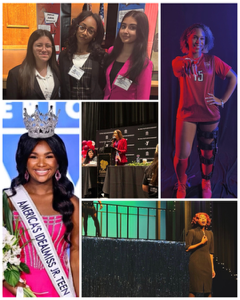
The assumption is that YAG students exist in an academic bubble, disconnected from the rest of high school life, convinced they are somehow different. But the reality tells a fuller story. Within this delegation alone are varsity athletes and students who compete in AAU sports year-round. Reese Carter balances soccer practices and games alongside preparation for State competition.
Others move between rehearsals and research; students like Aniston Bell, involved in the band, who juggle performance schedules with legislative drafting and media deadlines. In the media section, delegates prepare coverage and interviews and publish stories under strict deadlines while balancing commitments outside of YAG.
Some are also scholarship pageant competitors preparing for stages such as Texas Teen USA, demonstrating that civic engagement and stage presence are not mutually exclusive. These identities do not compete with one another; they coexist. The stereotype suggests isolation. The evidence reflects balance.
Youth and Government, according to the YMCA’s mission, is designed to develop responsible citizens and future leaders through direct participation in democratic processes. Research from CIRCLE (The Center for Information & Research on Civic Learning & Engagement at Tufts University) indicates that youth involved in structured civic programs demonstrate increased leadership confidence, communication skills, and long-term civic engagement.
Similarly, findings from CASEL emphasize that extracurricular involvement strengthens collaboration, discipline, and academic focus, skills directly tied to classroom performance. These outcomes do not describe socially disconnected “try-hards.”
They describe students’ growth in choosing. Caring deeply about something, whether it is athletics, performing arts, journalism, or civic debate, does not make someone one-dimensional. It makes them invested.
The hallway whispers capture only a surface image.
While some students stay behind, others board buses to practice leadership in real time on fields, on stages, in newsrooms, and in legislative chambers.
If anything needs redefining, it isn’t the students. It’s the label.