Volunteer with us Today!! We have various dates to choose from Jan 31st | Feb 1st | Feb 27th | Feb 28th | Mar 1st | Sign Up Today!

txyg

About TX YG

This author has not yet filled in any details.
So far TX YG has created 234 blog entries.

Day One at YAG State Centers on Purpose and Perspective
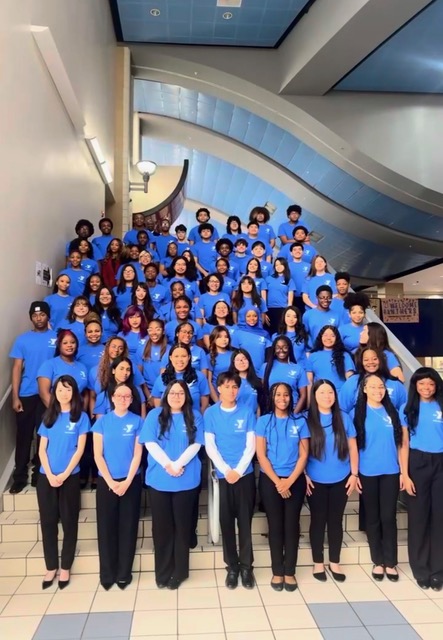
Duncanville High School’s YAG Delegation Prepares for Competition

Alana Dixon
Duncanville High School

The 2026 Texas Youth and Government State Conference did not begin with debate or trial proceedings. It began with intention.

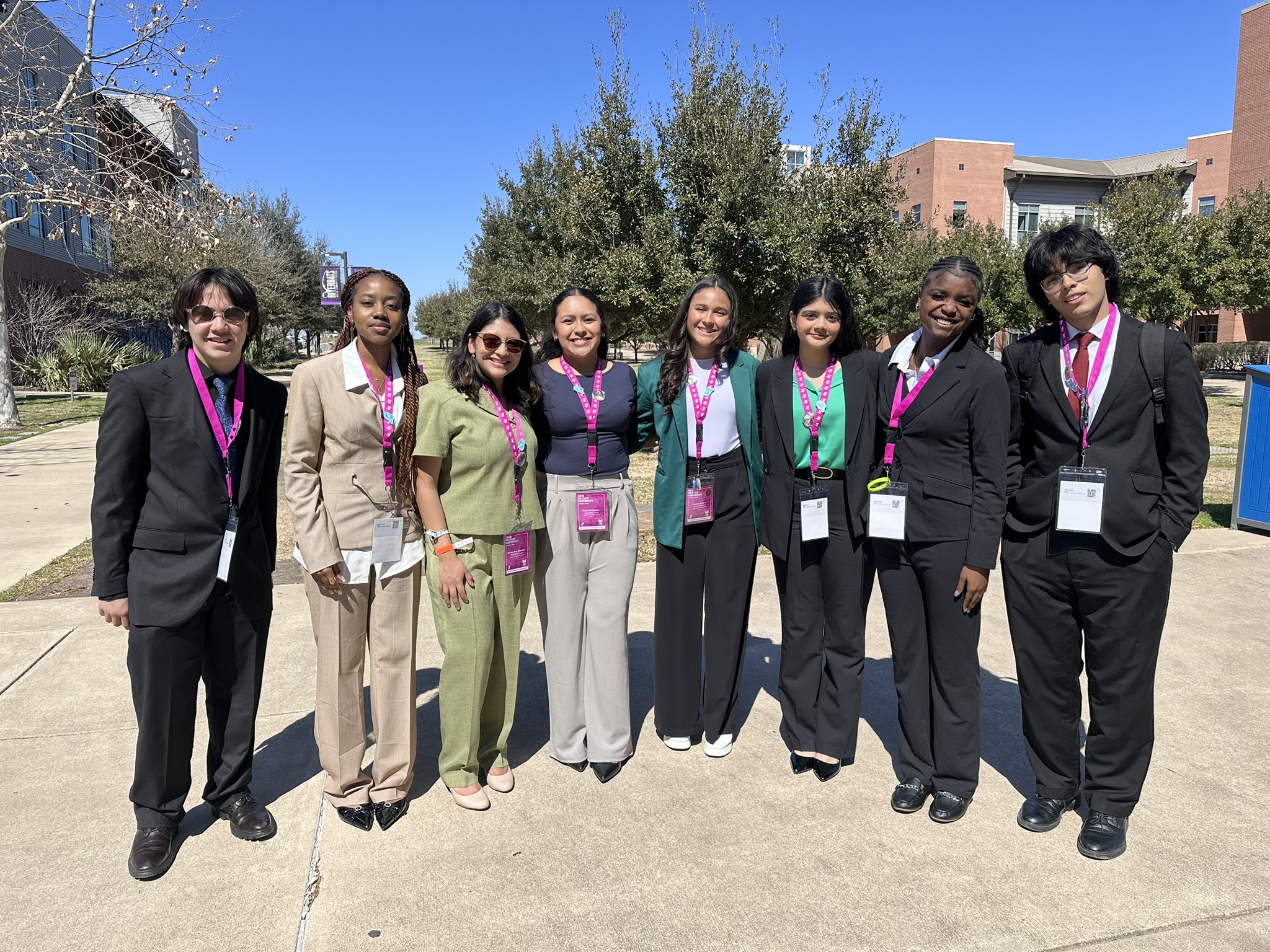
As delegates arrived at the Kalahari Resort and gathered for the opening ceremony, the atmosphere reflected more than excitement; it reflected possibility. Students from across Texas filled the auditorium, dressed in professional attire and representing their delegations with pride, prepared for three days of leadership, collaboration, and growth. The energy in the room was both focused and hopeful, signaling that something meaningful was about to unfold.

Keynote Speaker Heidi Post set the tone for the conference with a message that extended far beyond competition.

“Build those authentic relationships,” Post urged, emphasizing that the impact of Youth and Government is not measured solely by awards, gavels, or advancement, but by the connections formed along the way. Her words shifted the focus from achievement to intention. Success, she suggested, is rooted in purpose and people.

Her remarks centered on a defining question that lingered long after the ceremony concluded: What will your why be?

For many delegates, Day One was about orientation, checking in, reviewing schedules, reconnecting with teammates, and meeting students from new delegations. Conversations filled the hallways. Lanyards were adjusted. Committee assignments were discussed. Beneath the surface of first-day anticipation, however, something deeper was quietly taking shape.

Purpose.

Before gavels are struck or bills are defended, Youth and Government asks students to consider what drives them. Is it advocacy? Leadership? Personal growth? The courage to challenge themselves in unfamiliar spaces?

Post’s emphasis on authenticity reframed the conference before it officially began. Relationships, she noted, are what sustain impact long after the weekend ends.

If Day One established anything, it is this: Youth and Government is not simply a simulation of democracy. It is a space where delegates define their own reasons for stepping into it and discover who they are becoming in the process.

As the conference moves forward, one question remains central. What will your why be?
2026-02-28T11:45:06-06:00February 28th, 2026|Uncategorized|0 Comments

From Powerless to Powerful: How Civic Engagement Heals Youth Anxiety

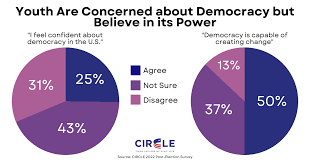
Graph of teens who are concerned about Democracy

Since 2015, trust in American Institutions has declined steadily among young people. In a study done by Harvard in November of 2025, only 13% of youth believe that the country is heading in the right direction. For many youth, the systems that are supposed to support them no longer feel stable. Even though many of these teens are not able to vote, over 60% of 13-17 year olds and 64% of 18-25 year olds worry about politics.

Many teens avoid having conversations about politics for fear of being “canceled”. Youths say that “cancel culture” seems to be an inescapable part of daily life, with this practice being especially present on social media. With the chance of public shaming and social exclusion, many youth do not feel safe sharing their views when it might differ from others. The impact of this cancel culture leaves teens with high amounts of social anxiety, depression, trust issues, low self-esteem, and even suicidal ideation.

Youth also have a concern for where their future is going. With issues like climate change, gun safety, housing cost, and global issues, youth do not feel as though the political system is meeting their needs.

Due to these fears of social consequences and lack of knowledge, most youth avoid politics altogether. But, when teens avoid politics, it gives them a sense of powerlessness, which is shown to increase anxiety.

So how should teens overcome the mental health struggle that comes with politics? Many studies point towards civic engagement by voting, volunteering, or jumping into political issues.

Volunteering gives youth a sense of purpose and the opportunity to be in something that is bigger than themselves. Volunteering releases dopamine, which is a hormone that is released when you do enjoyable or beneficial activities. Dopamine makes teens more relaxed and helps lower anxiety. Voting has a direct effect on public policy. For youth, the knowledge that they had a part of what happens in their community, state, and country can help settle their anxiety and a fear of the unknown.

Instead of letting politics become a source of anxiety, youth can choose to make it a source of purpose. When teens volunteer, debate, advocate, and vote, they are not just shaping policy. They are shaping their own confidence. The future feels less frightening when you are actively building it.

Laney Morgan

2026-02-28T11:18:54-06:00February 28th, 2026|Uncategorized|0 Comments

The Push Away from the STAAR Test’s Importance – State Affairs Forum Proposal #2

The Push Away from the STAAR Test’s Importance – State Affairs Forum Proposal #2

By Naden Ramirez

W.B Ray

Every spring, students across Texas walk into school and are then stuffed into classrooms, gyms, and libraries, all with the same purpose of taking a test which will determine their next school year. This is the STAAR test, a “standardized academic achievement test designed to measure the extent to which a student has learned and is able to apply the defined knowledge” (Texas Education Agency).

In classrooms across Texas, the STAAR test holds immense importance as it determines whether or not one will advance to the next grade level, and if they will need extra tutoring and assistance. Despite the immense importance that the STAAR test holds for families and educators across the state, it is highly unpopular. This is reflected in The Texas Tribune, where “Families and teachers… say the test puts too much pressure on students and that preparing for it takes up too much time in the classroom.”

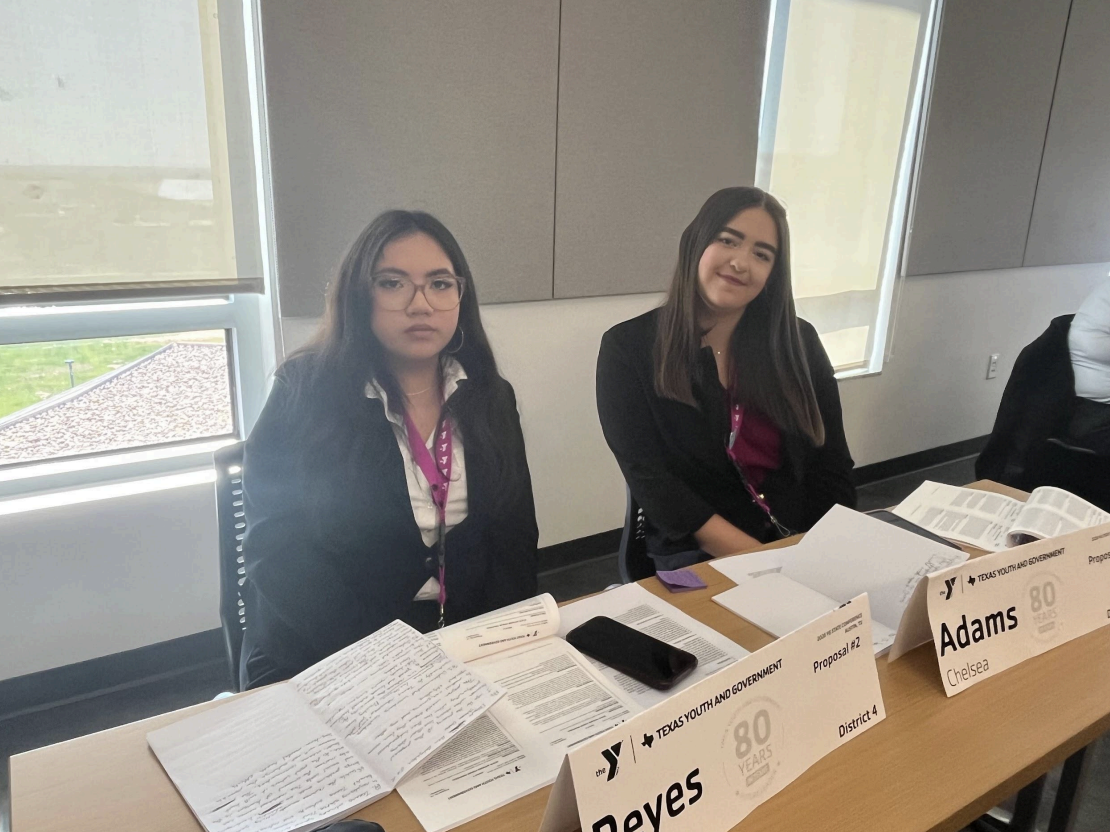
Two distinguished delegates (along with a third delegate who was not there today) in the State Affairs Forum seek to solve this issue with Proposal #2, which argues to lessen the importance of the STAAR test while simultaneously placing a greater importance on reviewing the cumulative performance of a student over the school year. Their desire to advocate for a change to a more holistic review of a student’s performance stemmed from their personal relationships with educators and the school system. Stephanie Reyes and Chelsea Adams revealed that “It was kind of a personal matter for us, because her mom is a teacher, and my sister is a teacher… So we’ve personally seen how much it impacts, not just students, but also teachers and classes.”

Reyes and Adams addressed how the STAAR test holds so much importance, only for students to need to meet the most basic standards, stating that “Our issues aren’t directly with standardized testing, it’s more with the weight that it pulls… They stress these kids out so much with the STAAR test, just for them to only need to get the lowest grade possible.”

In addition to addressing the issues with the importance of a singular standardized test, they also pushed for a more holistic type of review, expressing that “Instead of the just one end of the year test, we would also do a beginning and middle of the year [test] as some schools are already doing.” This reflects their desire for a student’s evaluation to be based on their growth and development over the year instead of a singular evaluation where any number of factors can affect one’s performance on that day.

Stephanie Reyes and Chelsea Adams reflect the importance of programs like the YMCA YG, as it allows students to openly express their opinions on real-world issues that impact everyone. They show how passions for certain issues or topics translate into real-world expressions, where their voices are widely heard.

2026-02-28T11:23:00-06:00February 28th, 2026|Uncategorized|0 Comments

One of the Final Ten: Delegate Oliver Advances to General Assembly

By: Diana Jimenez

Out of dozens of proposals presented in the State Affairs Forum, only 10 are selected to present in the General Assembly, with two additional alternatives waiting in case time allows. It is one of the most competitive stages at the Texas Youth and Government state conference for the State Affairs Forum branch, and this year, Delegate Ramyiah Oliver is one of the few who made it. After advancing through the first committee and the second committee, Oliver’s proposal earned a spot on the General Assembly floor. General Assembly (GA) is the final round, where the top proposals are debated in front of the entire forum, making it both an honor and a major accomplishment. For Oliver, the experience has meant more than just advancing. “Making it to GA has been amazinggg,” Oliver said. “It’s truly an eye opener for me in ways that I never thought mattered. It’s helped my confidence, and it feels exhilarating to talk about a topic that’s so important to me and to share a solution.” Getting to GA requires strong research, clear speaking, and the ability to defend a proposal under intense questioning. Each round becomes more competitive, making it harder to stand out. For Oliver, making it to the final stage represents growth. Presenting a solution to an issue she deeply cares about and having it recognized as one of the top proposals in the forum has strengthened her confidence and voice as a delegate. General Assembly is more than just the last round. It is the moment where preparation, passion, and confidence all come together.

2026-02-28T11:01:19-06:00February 28th, 2026|Uncategorized|0 Comments

What About The Picky Eaters?

Mac-n-cheese bar meal with chicken, broccoli, a brownie, and Mac-n-cheese

We all have preferences for what our diet is. Some people like spice, others like flavor, but what about those who prefer it plain? I’m not talking about food restrictions; I’m talking about the picky eaters. The past two days of our stay at Kalahari have been filled with adventure and excitement, until we received complaints about our food. The first night of our stay, we were treated to dinner at a macaroni and cheese bar. This had a lot of variety and was open to all types of people who like different types of flavors and textures.

The majority of the people had few complaints about the food. But on Friday the 27th and Saturday the 28th, breakfast was not provided. We were given breakfast snacks on Thursday night, but the YMCA youth government program told us to have a “hearty breakfast.” On Friday, lunch was provided, which was chicken burritos. The burrito consisted of: Burrito tortilla, grilled chicken, white rice, cheese sauce, and beans. We were also given nachos, with the option of queso, along with a bottle of water. Most people would say this is a well-balanced meal. But, for the people who have texture preferences when it comes to food, beans and cheese sauce isn’t what they can stomach. For the majority of the delegates I was around, including myself, were picking apart the burrito, only eating the chicken, rice, and the tortilla.

I asked 100 delegates if they were satisfied with the lunch on Friday. 54 said no, and 46 said yes. This is over half of the delegates that I interviewed who weren’t happy with their meal. Everyone has different opinions on food, but not this many people should be dissatisfied with lunch. Dinner on Friday was a taco bar, with the choice of a crunchy or soft taco, salad, and food that goes in the taco. The chicken was spicy, the ground meat had peppers, and the cheese had sour cream and jalapenos. This wasn’t the most picky-eater-friendly meal for most. There was a good number of delegates and volunteers who did enjoy the taco bar, but not all. There was no label on any of the food to know if it has a spice level. One of the delegates that I met took a bite and said that it’s spicy. This caught her off guard, making her skeptical of her dinner. From delegate Yuyi Wang, “My favorite meal was the mac-n-cheese bar, and I loved the brownies that they gave us. But the beans in the burrito gave me stomach problems.” A delegate named Rachel Beris, who is vegetarian, said, “I like how they had vegetarian options, because I don’t like meat. There were enough non-meat options per meal.”

Organizing dinner for 1,300 teens isn’t easy, but with so many critics, a change should be taken into consideration for how long the delegates are staying.

Lizzy Malina

2026-02-28T11:20:56-06:00February 28th, 2026|Uncategorized|0 Comments

Finding the Perfect YG Section: What’s the Best Fit?

Where do you think you fit into Youth and Government?

By Naden Ramirez
W.B. Ray High School

The YMCA Youth and Government program has a rich and extensive history, which has enriched the lives of thousands of students through the teaching of democratic principles and values. It’s an extensive program with various sections where everyone can shine and find their special interest. Although this is an incredible program, it is certainly overwhelming for first-time participants. So, in order to assist you with this incredible journey, here are some facts to gain some insight into the perfect section for you!

Legislative

For Legislative, you have to first identify an issue for legislation, write a bill where you propose your ideas on how to solve that issue, and lastly present and debate that bill. With Legislative, you are able to express your opinions on important topics in a real-world environment. If you are someone who is extremely passionate about a certain issue or topic, this is a great section for you.

Ask yourself these questions:

  • Is there a topic or issue that I deeply care about and want to discuss?
  • Do I want to grow in an environment where I can defend and debate my beliefs?

Judicial

In the Judicial section, delegates participate in a mock-trial setting, where they play various characters. Delegates act as attorneys, witnesses, judges, and bailiffs throughout multiple rounds where they compete against various teams. So, if you are someone who can act and immerse yourself in a “scene,” Judicial is perfect for you.

Ask yourself these questions:

  • Do I like to immerse myself in an environment where I can act out a part?
  • Do I like to work in a team where we all work to succeed together?
  • Do I want to gain a better understanding of our judicial system?

State Affairs Forum

In the State Affairs Forum, you first select a topic that addresses Texan issues and then write a proposal in order to solve that issue. With the State Affairs Forum, you are able to dive into major issues that affect Texans and the greater national and international community. You gain a deeper understanding of real-world issues and are empowered to speak about what you are passionate about.

Ask yourself these questions:

  • Do you want to gain a better understanding of real-world issues?
  • Do you want to learn more about how to solve real-world issues?

Media

Media at YG is all encompassing of all the various types of media, which include blogs, photography, social media, and more! Those in media are able to cover anything YG-related, whether it’s a bill on climate change prevention or an interview with a passionate fellow YG delegate.

Ask yourself these questions:

  • Do you want to spread your unique message with the world?
  • Do you want to cover stories that aren’t well-recognized?
  • Do you want to inform people of important stories?
2026-02-28T16:25:07-06:00February 28th, 2026|Uncategorized|0 Comments

Winning Or Learning: What is Youth & Government really about?

By Taylor Alexander

At Youth & Government, it’s easy to get caught up in the idea of winning. Titles like Distinguished Delegate, Chief Justice, or even Youth Governor sound impressive. People come ready to compete with some of the best students in Texas, debating bills and proposals that could impact the future of Texas. Everyone wants to represent their ideas well, and of course, recognition feels good. There’s nothing wrong with aiming high. Awards show hard work, preparation, and confidence. When you see candidates running for Youth Governor, you can tell they truly care. I’ve talked to a few of them, and most of them say the same thing: they want to improve the program and make sure everyone’s voice is heard. That alone shows leadership isn’t just about a title. But when you really think about it, what matters more: winning or learning? Youth & Government is built around creating change and understanding how government works. Whether your bill passes or fails, you walk away knowing more than you did before. You learn how to speak with confidence, how to respond under pressure, and how to respectfully disagree. Even if you don’t win an award, you still gain experience that builds you up. You live, and you learn. Every idea presented has value, and every delegate contributes something meaningful to the conversation about Texas and its future. I talked to a fellow delegate, Ja’Niya Chevalier, who has been involved in Youth & Government since middle school. She sees it as more than something to put on a résumé. For her, it’s about making a positive change and always putting her best foot forward. That mindset is what really matters. Some come to win. Others come to be heard. But in the end, the growth, the confidence, and the experiences are what have a lasting impact.

2026-02-28T10:10:06-06:00February 28th, 2026|Uncategorized|0 Comments

County Court Mock Trial: State of Texas vs Lynn

One of Glenda Dawson High School’s Mock Trial Teams Prepares to enter the courtroom

By: Alaurya Short
Glenda Dawson High School

Austin, TX – The trial for the murder of council member Dakota Cody Mattis on February 3, 2026, involved the prosecution presenting evidence linking Harper Lynn to the crime. Key witnesses included lead investigator Jordan Reeves, who detailed the explosion’s cause and evidence found, such as a prepaid burner phone and fertilizer. Jamie, a longtime friend, testified about Harper’s growing obsession with Mattis. City IT systems administrator Riley Knox provided access to Harper’s deleted social media posts and laptop searches. The defense plans to counter with digital forensics expert Zane Torres, Gloria Parker, and Harper Lynn herself, aiming to disprove the prosecution’s charges.

The court proceedings involved a digital forensics expert, James Therese, who analyzed a city-issued laptop and a burner phone related to a case. Therese testified that the laptop, kept in an unsecured o ice, had searches that could have been made by anyone, including sta and interns The prosecution questioned Therese’s conclusions, which were based on secondhand data, and highlighted inconsistencies in the evidence. A witness, Gloria Parker, described seeing a tall figure near a vehicle, which contradicted her log’s description of a small female.

The defendant, Harper Lynn, explained a heated exchanged during a budget meeting and her subsequent tweet, which she later regretted.  The prosecution questioned Harper Lynn about her social media post, which included the term “86,” and her financial transactions, including a $10,000 transfer. Lynn claimed she was unaware of the significance of “86” and that the transfer was reported immediately.

The prosecution presented evidence of a 40-pound bag of fertilizer found in Lynn’s possession, suggesting it was used for improvised explosives. The defense argued that the prosecution lacked concrete evidence and that the case relied on circumstantial evidence. The prosecution countered that the evidence pointed to Lynn’s guilt.

In conclusion, the court found the defendant not guilty of murder, not guilty of solicitation, but guilty of criminal conspiracy.

2026-02-28T10:08:15-06:00February 28th, 2026|Uncategorized|0 Comments

What’s It Like in State Affairs Forum?

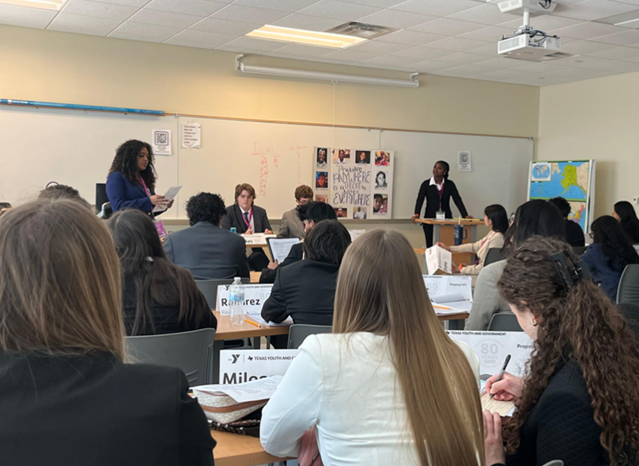
Above: The State Affairs Forum Committee D in Room 1221

By Naden Ramirez
W.B. Ray High School

Walking into a State Affairs Forum room during Committee Round 2, the energy is certainly different. Every delegate is determined to give their best, asking thoughtful questions and promoting great debate. Whether scared or excited, all these delegates look forward to participating in an intelligent discussion over real-world issues.

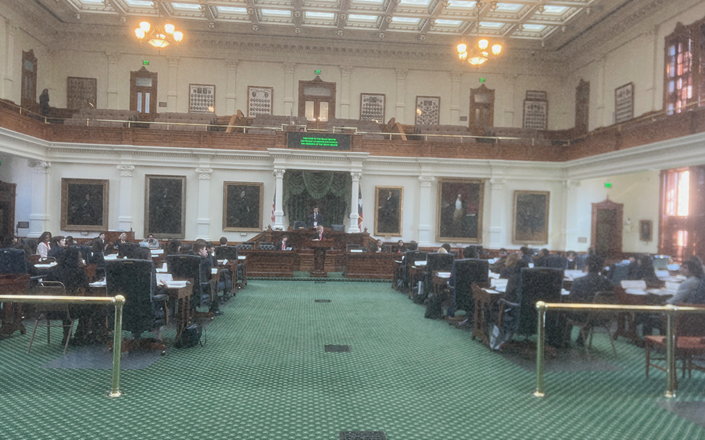
The State Affairs Forum section of the YMCA YG program is meant to broaden delegates’ knowledge of pre-selected current events topic areas. These areas include education, public policy, health, civil liberties, and more. Through the utilization of a committee hearing structure with parliamentary procedure, it fosters intelligent debate on finding the best solution and increases real-world understanding of Texan, national, and international issues.

The room is filled with serious moments, with delegates discussing important topics like illegal immigrants and police brutality. Sparsely included are also funny moments with delegates repeatedly forgetting to state their name and delegation, causing the room to burst out in laughter, or the time running out before someone is even able to ask their question, where you’ll see small smiles across the room.

Delegates share their personal experiences when speaking in favor of or against a bill, showing how this experience reflects the real world and real-world issues. They speak about their parents’ experiences and how their parents’ journey led them to achieve their own journey. One of the most memorable proposals was Proposal No. 84, which discussed police brutality and racial profiling in Texas. The speaker, Ramiyah Oliver, commanded the room, passionately speaking over Texas’s longstanding and complex history with race, which reflects plenty of systemic inequities. She named various people of color’s experiences, such as the case of Sandra Bland, an African American woman who was stopped for a minor traffic violation and was unjustly and forcibly detained. Once her proposal was finished, everyone was left in awe of her passion and dedication to voicing this deeply systemic issue. This was reflected in the booming round of applause she received, which was most certainly well-deserved.

Everyone is there to learn and participate in open and honest debate. The core of the State Affairs Forum, as well as the rest of the Youth and Government, is to inform students of our government and legal system, while also making them active participants. This spirit was expertly reflected in Committee D, and most certainly across all the other sections as well.

2026-02-28T09:30:01-06:00February 28th, 2026|Uncategorized|0 Comments

First Committee: A Test of Adaptability

By Diana Jimenez
Uplift Summit High School

For many delegates in the State Affairs Forum, first committee is where everything feels real. It is the first round at state, where proposals are presented and only 50 move on to second committee. From there, just 12 will advance to the General Assembly, which is one of the biggest stages in the forum.

For Delegate Uppal, this year carried even more pressure.

As a first-year member of Youth and Government and a first-time state delegate, Uppal already faced the nerves that come with competing at a higher level. At the district level, he worked with a partner. However, when his partner was unable to attend state, Uppal had to adjust quickly, as he went from sharing responsibility to handling research, presentation, and questioning entirely on his own.

Despite the pressure, Uppal advanced to first committee, ready to handle whatever was thrown at him. “First committee was a mess,” Uppal said. “Timing was all over the place, and evaluators didn’t have answers and weren’t present when needed. I applaud my committee room for adjusting to those constraints, but the YMCA needs to do better in planning this.”

While the room may have faced organizational challenges, delegates adapted. Presenters adjusted their timing, asked questions when possible, and continued debating under less-than-perfect circumstances. State Affairs Forum is meant to challenge students not just in policy debate, but in professionalism and flexibility. For many first-year delegates like Uppal, the experience became a lesson in resilience.

Even when things are not perfectly structured, the responsibility still falls on delegates to perform. And for those stepping into committee rooms alone for the first time, that pressure only builds confidence moving forward.

2026-02-27T17:01:27-06:00February 27th, 2026|Uncategorized|0 Comments
Go to Top