Volunteer with us Today!! We have various dates to choose from Jan 31st | Feb 1st | Feb 27th | Feb 28th | Mar 1st | Sign Up Today!

YG State Conference

Impact of Youth and Government

By Lilly Salcedo,
Duncanville High School

Youth and Government is a prestigious competition in which young delegates practice the formality of our government system in classrooms. The idea of Youth and Government was created to help reform our society to create change for the better. This program has helped inspire young delegates to consider devoting their livelihood to careers in public service and help the citizens across our country. 

“It’s definitely given me a larger scale to think on,” says Izzy Ryals from Belton New Tech High School. “I know I want to go into a law career and things like that, so I see this as me getting more involved.” This comment made by the Appeals Court member shows just how important an organization like this can be. Youth and Government not only allows for the students to be a part of a community but to grow and make society more efficient and fair. 

While watching State Affairs Forum committees take place, this theme of community and growth was prominent in the environment. “I had no interest in politics whatsoever, but this has been a lot more fun than I thought it would be,” Thomas Goa from SAF said. “I am really glad that I took the opportunity to come here and get to present about real world problems.” Growth has been a clear part of his experience as a delegate and many others here at the Renaissance Hotel in the Arboretum section of Austin. 

This organization also exposes these young students to different ways debate issues. “I do think I would enjoy politics,” State Affairs Forum member Aanika Dewan said. “It’s fun to debate!” This Youth and Government organization may seem small and inadequate as an academic sport. However, all around the members are not only loving what they do, but are inspired to continue this path. 

Youth and Government has become one of the most powerful organizations a school can host because of the wave of productive youth it helps generate. These groups of outspoken and thoughtful youth are becoming more powerful by having the inspiration and drive that Youth and Government has given each and every delegate.   
Youth and Government students debate their legislative proposals.
Legislative Section Draws Students from All Backgrounds

By Nora Kelly,
Liberal Arts & Sciences Academy

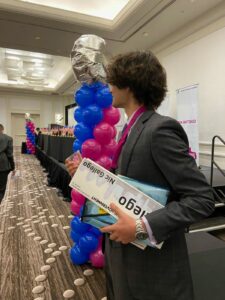
There are countless reasons that people join the legislative section of Youth and Government, from expanding connections to learning details about how laws are created, presented, and passed. Nicolas Gallego, a clerk for his committee this morning, joined Youth and Government because of his previous exposure to the legislature from a young age. 

“I chose to join the lege because it was something my father did. He was a state representative for a long long time,” Gallego said. “I always thought what he did was fun, so I figured this was a good way for me to get as close to that as I could.” 

Will Bolduc has been competing in lege for four years now and enjoys being able to be a chair and govern over committee debates. Joining Youth and Government was the first step for him to gain hands-on experience in lawmaking procedures. 

“I thought it would be really interesting to learn more about the legislature and the intricacies of how laws are made,” Bolduc said. “My favorite part is getting to debate the highly controversial bills every conference.”

Conference schedules are busy with back to back meetings from the morning to the afternoon. The morning session is used to determine what bills will be presented to the full house in the afternoon. 

“Lege starts every morning split into committees of about 15 people. In each committee, each person’s bill is debated and voted on” Bolduc said. “After committee, we move to the full house debate where we debate a select few bills from the ones that were passed in committee.”

Each participant in the section writes their own bills, arguing about something they are passionate about. They spend the year tweaking them to make as presentable as possible to the full house. 

“My bill is about implementing a harsher punishment for police brutality,” Gallego said “because that is something that I believe is important, especially after everything that has happened these last few years.”

Youth and Government’s legislative section is a good first stepping stone that allows those interested in public policy to test their interest in the procedure. It teaches people real life skills that they will carry for the rest of their lives. 

“I’ve learned a lot about how bills are made and how to research laws, and also a good bit about legislative procedure,” Bolduc said. “If I ever do go into public policy, this experience will be invaluable for writing and shaping real laws.”

The laid back culture of Youth and Government provides students an environment to be comfortable with other high school students so they are more likely to speak their minds about the issues that mean the most to them. 

“My favorite part about being in the legislative branch is debating public policy, because I find most of them to be fascinating,” Gallego said “I’ve definitely felt comfortable enough in Youth and Government to learn how to use my voice to get people’s attention over the years and make my opinion heard.”

Both interested in pursuing a career in politics and public affairs, Bolduc and Gallego have found their home in the legislative branch. Both of them, as well as everyone else in lege, enjoy the opportunity to find an issue that they are passionate about and argue to their peers about why something needs to be done about it.  

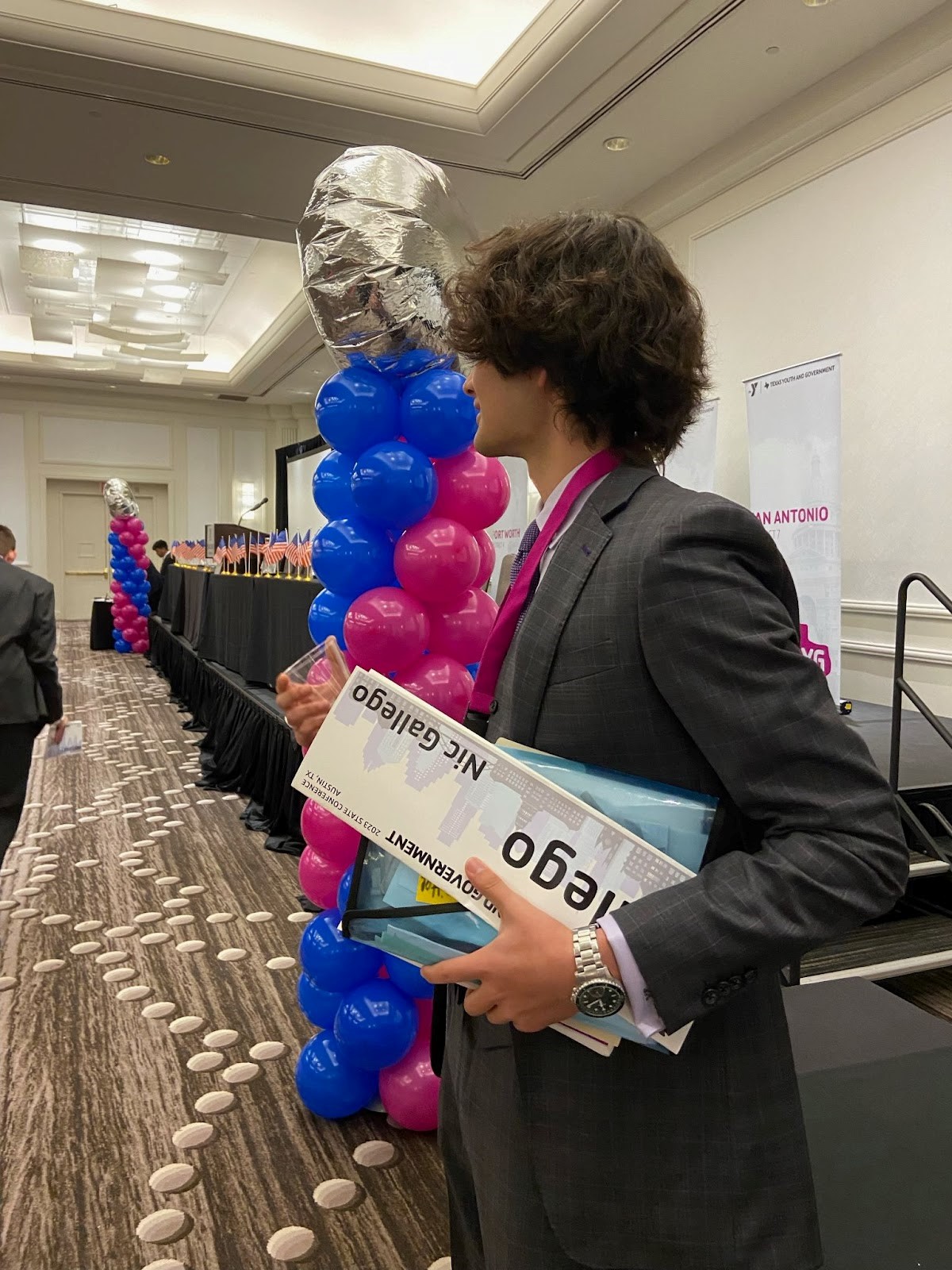
Nic Gallego after leading his committee this morning, talking to other members about their bills that were presented.

SAF: Parental Leave Benefits New Parents

By Saron Elias,
Garland High School

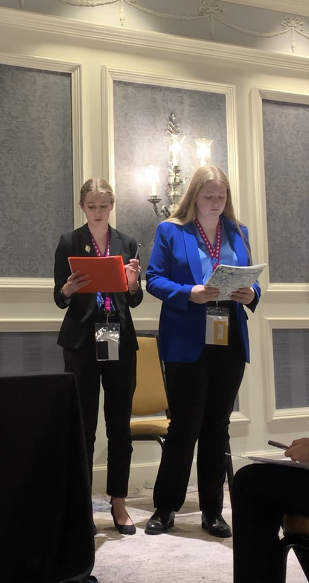
In a Friday morning Student Affairs Forum (SAF) session taking place in the Bluebonnet room at the Renaissance Hotel, Delegates Natalie Koch (left) and Mackie Beitsch (right) proposed the implementation of “12 weeks of fully paid parental leave.”

Koch claimed that the six weeks typically provided are not enforced by law, and that the time is typically only allotted to mothers. The human body takes “at least six weeks to recover physically from birthing,” as Beitsch said, and that this timeframe fails to take the potentially necessary time for mental health recovery into account. This new proposal will ensure that both adoptive and biological parents, consisting of any combination of gender/sex, receive 12 weeks off. Although adoptive parents do not endure a physical recovery, all families need time “to adjust” to “having this new child in their home” as Koch said. 

Delegate Elise Bostian believes that this proposal should pass. Bostian argued that policies such as this are very common in other first-world countries, and that the “U.S. is one of the only first-world nations that does not actually have required paid leave for parents.” She also connected the issue to abortion, claiming that this policy will help protect those who are affected by restrictive abortion laws and enable them to raise their child more successfully.

Delegate Joshua Lee said he appreciates the inclusiveness within this proposal. Lee claimed that parental leave typically applies to “female parents, specifically parents that gave birth,” and that all parents “deserve the ability to actually properly care for [their kids].” Delegate Angela Luong was also in favor of this proposal. Luong stated that maternal involvement with the baby results in positive “growth of the child”. She believes that the proposition will contribute to an invaluable bond between mother and child.

However, not all delegates support this proposal. Delegate Elizabeth LeCompte claimed that people may “take advantage” of this paid time off by claiming to be the “biological father or mother, but not actually being the one to care for the baby.” She suggested requiring proof of legal paternity. Delegate Elie Park believes that the “financial burden” on small businesses will be too great. She worries that small businesses may not be able to even partially pay new parents for 12 weeks.

After thanking all participants, Beitsch addressed the possibility of the proposition being taken advantage of, stating that most businesses require some form of DNA test or other proof of parenthood. She also argued that “it is extremely hard to fake being pregnant” and that should the business contest a claim, it is now for the business to deal with. To address the issue concerning small businesses, Beitsch believes that it is the responsibility of businesses to care for its employees, and should an employee be let go, they can contest in court. Koch claimed that parents work incredibly hard to raise their kids, and implores her fellow delegates to give back through this proposal.

Women Taking A Stand for Change At State Youth and Government Conference

Frida Hernandez-Aguila,
Veterans Memorial High School

Many young women at the 2023 YMCA Texas State Youth and Government State Conference are making a stand for change in our world. With the second day of competition taking place at the Texas Capitol in Austin, all eyes are on the leaders of the future. Women around the competition are here to show their ideas to help make the world go round, starting with the government.

In every room, all around, there are young women here to show off their skills and powerful knowledge. There are young women who are here to participate in all of the categories. With this being Women’s History Month, it is important to highlight not only the women who are a part of where we are today but also the women who will be a part of the future. 

During women’s history month, we are reminded of those women who brought us to where we are now. It wasn’t until the 1890s that women were allowed to take part in the workforce. Then in 1917, Representative Jeannette Rankin of Montana became the first woman to serve in Congress. Now there are women all over the world showing that it is possible to be part of what was thought to be a “man’s” job.

Madeleine Albright was the first woman to be Secretary of State, and the highest-ranking woman ever in the United States Government. Kamala Harris became the first woman to serve as Vice President for the United States. Today, Catherine Masey, judge for LASA High School in Austin, embodies the qualities of a powerful young woman. Knowing what she is capable of, Masey takes the role of judge in the courtroom to help guide the lawyers and the jurors.

“I know you have to work twice as hard to be half as good as a man,” she says. “If you act like you know what you’re doing, no one should know otherwise.”  

Though it is still a male dominated field, Masey and many others like her have been able to overcome big and small obstacles. However, it is opportunities like these that allow these women to feel ‘strong’ and show that it is possible to become our leader of the future. 

Underage Drinking: A Nay or A Slay?

By LeeAnn Partin,
Hays High School

When exploring the process of how bills are passed in the State of Texas, the Legislative sector finds themselves meeting once again to question and amend acts presented with the hopes to pass to the full chamber of House and Senate. This sector joins together in Committee B, at the 76th State Conference during the weekend of March 2-5, to focus on Bill #HB103.

Bill #HB103 is explained to be an act to make consumption of alcoholic beverages as a minor with parental consent illegal, written by delegate Theodore Nguyen, of Glenda Dawson High School. Delegate Nguyen presents his bill to the legislative body, aiming for favorable recommendation and for amendments that will improve the bill to its best version. Nguyen’s bill details three provisions: 1) Raising the alcohol tax  from 8.25% to 10%, with the purpose of funding this bill, while simultaneously turning away people from alcohol with the price rise; 2) Allocate $200 million to the National Council for Alcoholism and Drug Dependence (NCADD) to spread awareness; 3) Exclude the consumption of alcohol for religious purposes. Delegate Nguyen’s bill passed with favorable recommendation and is amended once to clarify the definitions listed in his bill.

At the end of this bill’s assessment, delegate Sophie Zhou brought an amendment to the table, focusing on the tiny details of delegate Nguyen’s bill. Bill #HB103 lists definitions to words relevant to the subject matter, specifically: Alcoholic Beverages; Minor; and Consent.

“To protect our children and the future people in our society, I move to specify and clarify the definitions and provisions for this bill,” Zhou said. Delegate Zhou pushed to change the age of full legal responsibility, listed as 18 years old in the bill, to 21 years old as the new age. Delegate Zhou chose to center on these definitions for clarity, eliminating vagueness and assumptions that could be made.

Continuing to the proponent and opponent speeches, delegate Emory Miramontes Eldredge, from Boswell High School, rose as an opponent to Nguyen’s bill and spoke about why  she gaves an unfavorable recommendation. “Most parents would not allow their kids to drink, but they have still had these experiences” Eldredge argued. “I would say that allowing your kid to experience the negative effects of alcohol at a young age and understanding hangover and sickness, allows your kid to understand what’s going on.”

In the designated Question And Answer time slot, delegates brought up important questions to address the policies/actions going to be taken when putting this bill into place.

Delegate Avery Mason, Boswell High School, questioned the jurisdiction of delegate Nguyen’s bill. “Alcohol consumption is a federal issue. This law won’t change anything because this is a federal problem, not a state problem that we can change.” Mason said, questioning Nguyen’s plan of action.

Nguyen explained in response to this that alcohol consumption is under the jurisdiction of both federal and state law, so taking action won’t be an issue. Nguyen described that this bill will focus on public places like restaurants, so staff can implement restrictions of adults consenting to minor consumption.

The legislative body discussed back and forth how delegate Nguyen’s bill will be set into action, either private or public, but concluded with the bill’s planned restrictions for public spaces.

The yea’s are loud in unison for Delegate Nguyen’s bill, not before delegate Grayson Carlson requested a division, initiating a roll call vote to clarify how many delegates are for either side. Delegate Nguyen’s bill went through for favorable recommendation with 8 yea’s and 3 nay’s.

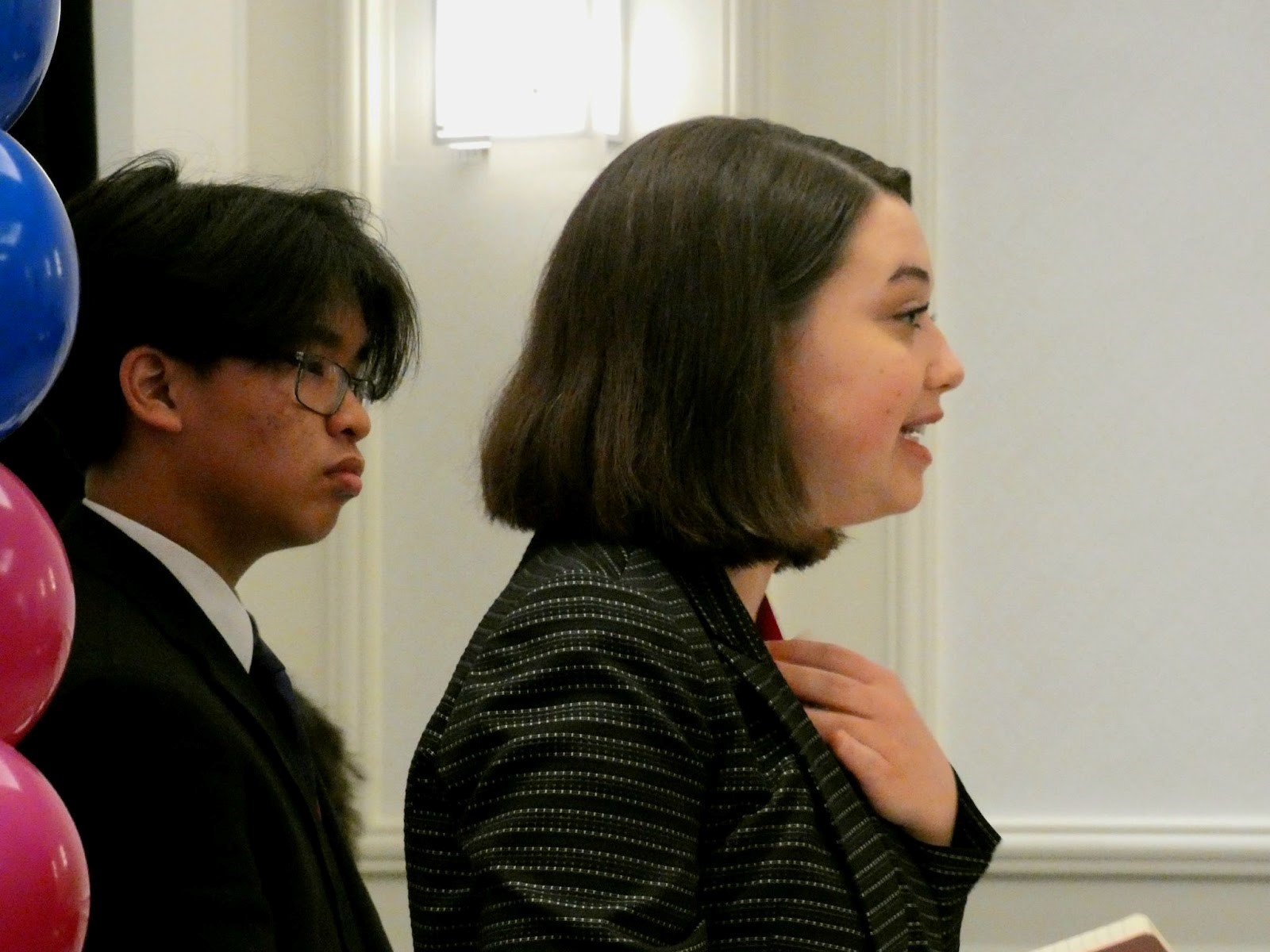
Delegate Eldredge gives her speech against delegate Nguyen’s bill, connecting with the legislative body through her own experiences.

Three Candidates Vie for Governor Role

By Piper Watson,
North Central Texas Academy

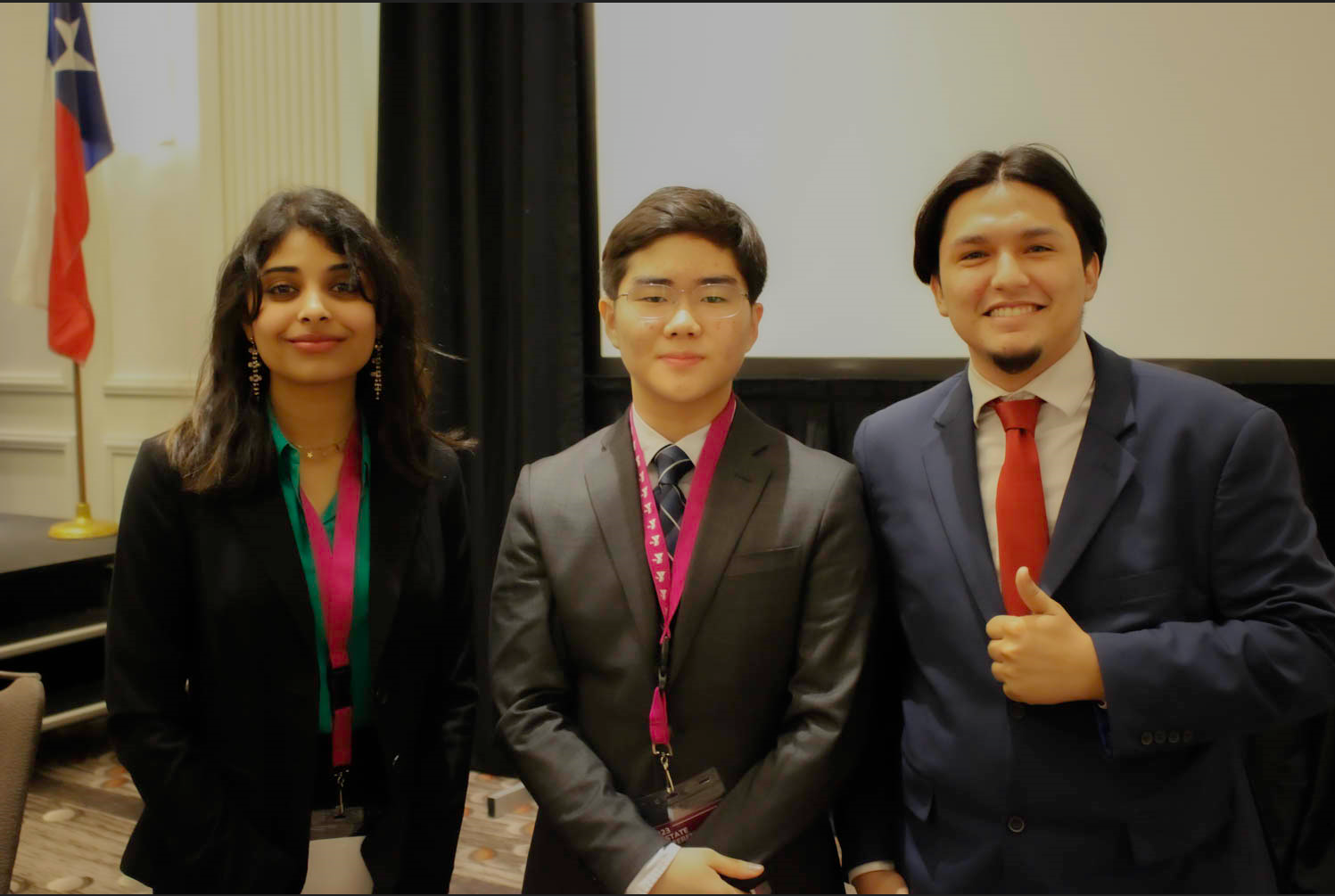
This year during the seventy-sixth Youth and Government State Conference we have three extraordinary candidates running for the esteemed title of the one and only Youth Governor. Ryan Lee, Vennela Mallampati, and Ramiro Lopez are the confident and talented delegates that are up to the challenge. They each have different strengths and ideas that make them fit the ideal qualifications that we want our Governor to represent the Youth and Government program with. 

Being involved in this outstanding organization for six years has given Vennela Mallampati the opportunity to participate in numerous sections of Youth and Government that are offered, from chairing and clerking to writing her own bills. She has also won distinguished delegate five times. She is confident in her knowledge of how Youth and Government operates and how to improve it using her unique outlook on the organization. For Vennela, the utmost substantial issue is that the governor advances independently after the election. Her desire is that the totality of participants from each and every delegation can assist her in portraying the Youth and Government program by bringing about a Governor’s advisory board to aid in planning the district and state conferences, food, and to voice any concerns that require setting up invitationals and workshops. Vennela believes “currently the biggest issue is that the governor works alone once they get elected and I wanna change that because I think that it’s incredibly important to get the people’s voices here like the youth in youth in government and so to do that I want to create a governors advisory board where somebody from each delegation. They would elect a representative to help me out if I win next year and give me input on district and state planning, food of course, and especially on what they need help on so we can plan invitationals and workshops.”

Ramiro Lopez has had several leadership experiences outside of this program. He was an advisor for the San Antonio Independent School District superintendent and also interned for United States House Representative Tony Gonzales. He is acquainted with doing hands-on work for the community. Ramiro is promoting increased amounts of hands-on work with all of our delegates from acquiring judges and attorneys for judicial diplomats to obtaining legislators to teach our legislative delegates the paramount and proficient ways to write their bills. Ramiro says that “If elected I would like to get more hands-on work when it comes to our delegates. So when it comes to judicial more judges and attorneys to work hands-on and the same for legislative more legislators to work with them on how to write bills.”

Having partaken in being an ambassador for Youth and Government and also outside of the organization is something that Ryan Lee has extensive familiarity with. He is president of several honor societies and other, smaller clubs. He comes from a smaller county on the outskirts of Houston, so he understands what it is like to be from the smaller delegations. Ryan thinks that “people should vote for me because I do come from a smaller delegation, so I do know what the smaller delegations want and need.” Maintaining and engaging the educational and political aspects of Youth and Government is a vital improvement Ryan would like to accomplish if elected.

All three incredible candidates already have plans on how they will improve our program for the better if they are elected. They all agree on striving to get the smaller delegations to have more voice and to assist them to work more with the larger groups while diversifying their perspectives to be exceptionally prepared for state. Overall these three intelligent and accomplished delegates all have the skills essential to be a successful governor, but only one will be elected to the position. Voting for any of these three brilliant and gifted individuals will reinforce and ensure that our Youth and Government program is properly represented and will flourish in the years to come.

Gubernatorial candidates Vennela Mallampati (L), Ryan Lee (C), and Ramiro Lopez (R).

Emily White Fights for Justice with her Rigid Firearms Bill

By Spandana Palyam,
Liberal Arts and Science Academy

“Fifteen years ago, if someone walked down the street with a gun, we would have been shocked and everyone would have been calling the police. But things are different now,” legislator Emily White claims. On March 3,  Emily White proposed Senate Bill 62 to demand the ban of high-capacity semi-automatic rifles in large public spaces. 

Senate Bill 62 states that carrying a long barrel firearm is strictly prohibited in large city public spaces (except for hunting). If caught, the offender will be charged with a third degree felony. White stated that even though a third-degree felony “is quite harsh,” it is necessary to motivate the public to create a safer environment. “The right to bear arms is a constitutional right that was made for citizens to be able to overthrow unjust governments. Will one person with a weapon in a public space overthrow an unjust government?” White questioned.

While this bill bans long barrel firearms, short barrel ones would still be legal to carry. This bill also does not limit the amount of guns that can be purchased or note that it’s prohibited to own a long barrel gun; only that long barrel guns cannot be carried in public spaces.

Though most legislators were in favor of this proposal, one believed the punishment was too harsh. Fellow legislator Emory Eldredge immediately challenged this assertion by exclaiming that she “wouldn’t feel safe having someone who has strapped a gun at a public place like Walmart.” All around the room, it was agreed that it was better to be safe than sorry.

White believes that this bill is not only necessary for Americans today but also future generations. “This issue personally matters to me, because I think in our culture, we’re really seeing the effects of gun violence on our children and just in our society as a whole.” 

Weapons in public spaces have repeatedly shown danger. Over 44,000 Americans were killed due to gun violence in 2022 and catastrophes like the Uvalde shooting have left Americans questioning their safety. White believes that with stricter policies, safety will increase in the public.

“My goal here is just a first step in initiative. The goal of my bill is to ultimately decrease gun violence and the public usage in Texas of these weapons,” White said..  The committee ended with a majority vote towards recommending the bill for Senate action.

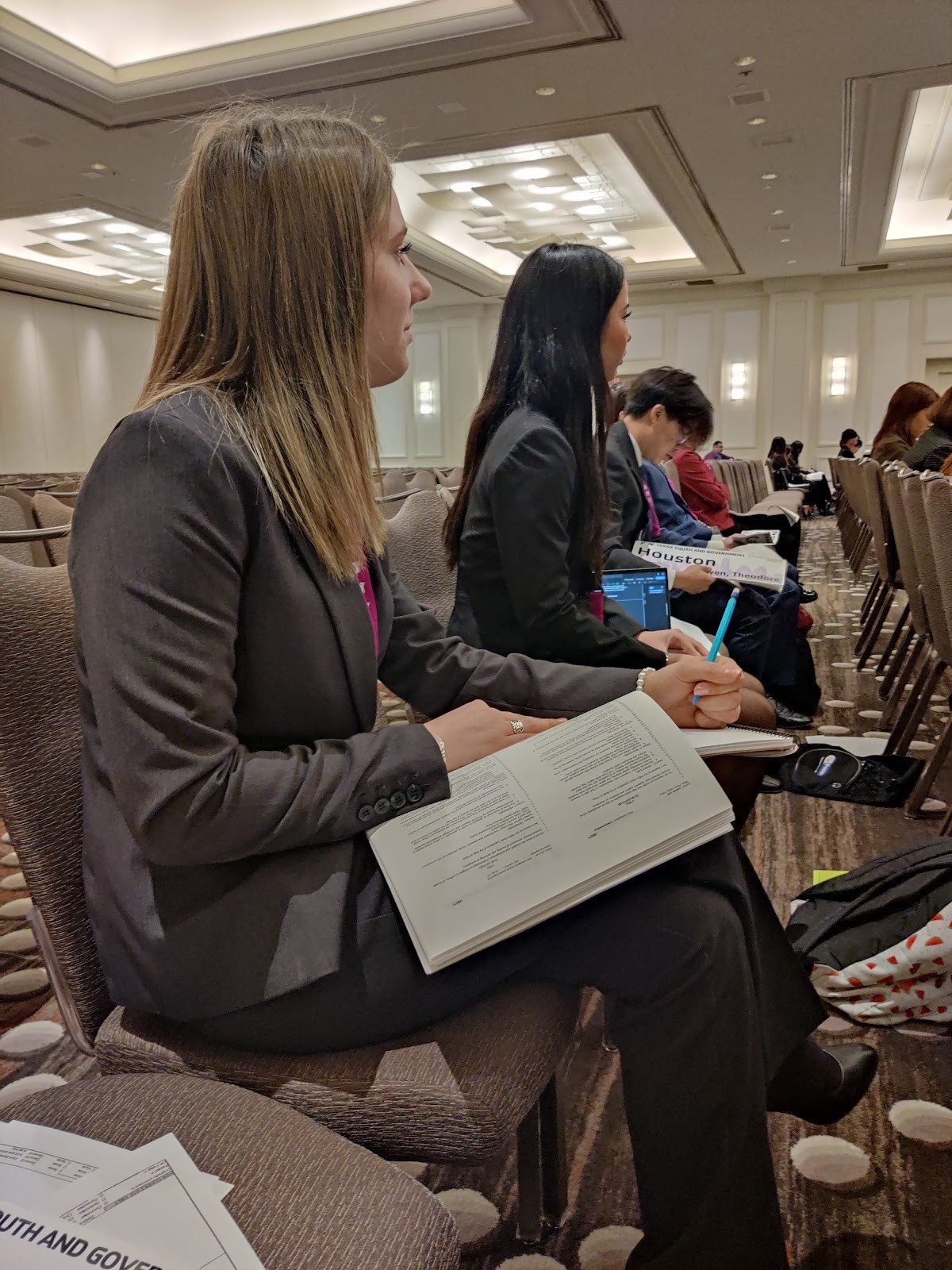
Delegate Emily White monitors debate on Senate Bill 62

Go to Top