
by: Malcolm Hodge
Glenda Dawson High School
Think back on the last time you bought a bag of chips. Were you surprised by how few chips were actually in the package? Were you upset at the fact that the bag was mostly air? Or did you simply start eating, emotionally resigned to universally misleading chip packaging? Senate delegate Jacob Buchanan (District 4) decided to do something about it with Senate Bill No. 10, a bill that required pre-packaged, bagged food to be filled with at least 70% product.
But what if these food manufacturers had a good reason? As stated by Food Republic, the extraneous air is known by chip companies as “slack fill”, a pre-determined amount of air that cushions the chips from spoiling and being crushed during the transport process. To keep the chips fresh, most companies use nitrogen, a gas that doesn’t react with the contents of most food.
According to Pneumatech, the process of filling chip bags with nitrogen is no different than resealing them; we’re all trying to protect the chips from going stale, an outcome that no one wants. But the amount of nitrogen necessary for this process is still up for debate. Buchanan argues that at least 70% of the volume of the bag must be food; he attempted to rally his fellow delegates in supporting this regulation on the Senate floor: “This is a common-sense bill, and what we’re dealing with right now is a scam.”
Other delegates protested inconsistencies in SB 10’s provisions, including its failure to consider that this increase in product-per-package would give food corporations an excuse to raise prices significantly. One delegate in particular spoke passionately about the bill’s potential to counteractively increase corporate greed. In her words, “Sure, we may have more of said product, but there is a greater price to pay.”
HB 10 saw multiple amendment proposals, including one that protects agencies that need sufficient air in their packaging to protect the food’s safety. This amendment saw significant pushback, as some delegates feared that corporations would use it as a loophole to bypass the purpose of the existing bill.
After three fervent pairs of pro/con speakers, consensus on SB 10 was so divided that the bill went to a standing vote. SB 10—or the “chip bill”, as referred to by the Governor’s Cabinet—did not pass in the Senate, but its long-winded debate was the ultimate testament to the importance of youth advocacy. The Senate delegates showed their skill in respectfully, yet tactfully, discussing topics that they care about. Buchanan closed with an impassioned universal statement: “a free market only functions when consumers have accurate information…Texas stands for transparency, fairness, and consumer trust.”
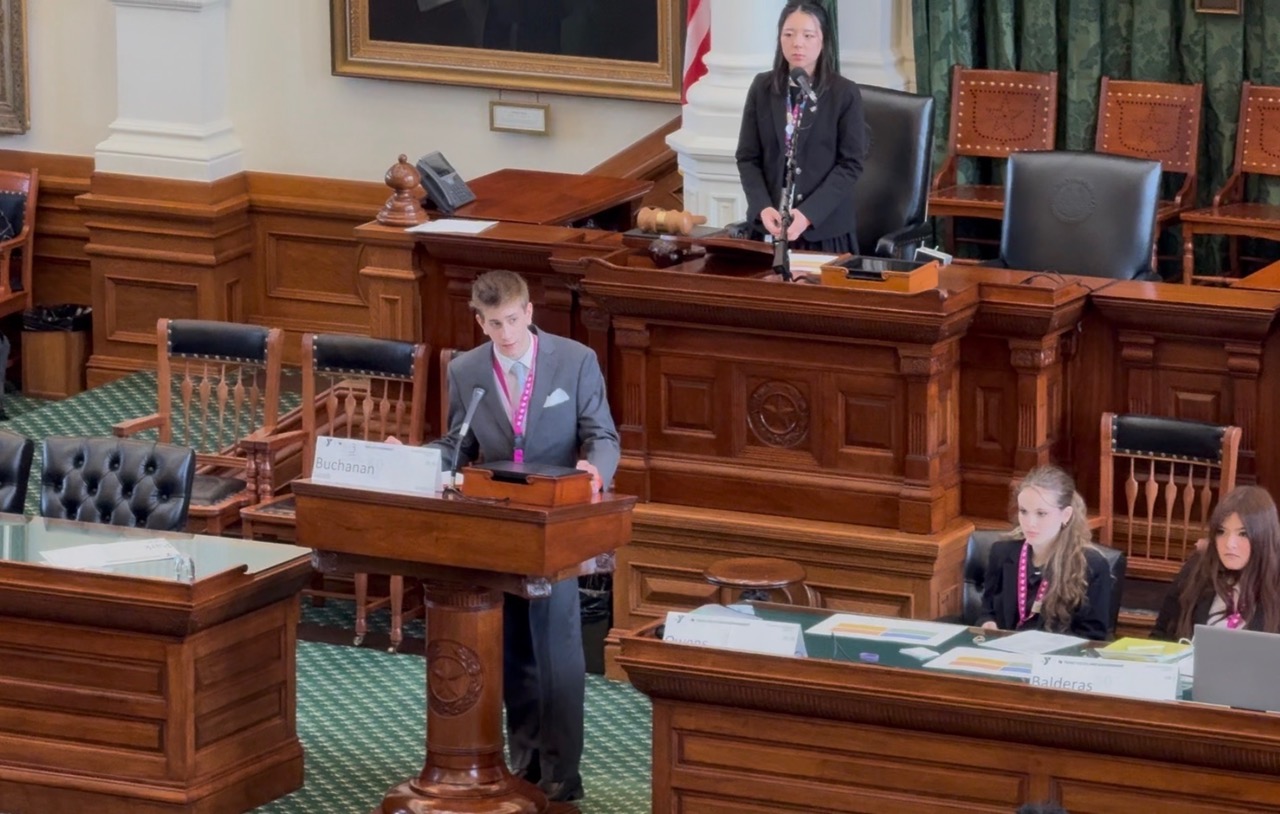
Senate delegate Buchanan defending Senate Bill 10 on the Texas Senate floor