
Most people can name the President. But fewer can name their cities’ mayor; and almost none can name their school board members. Yet, those local officials make many of the decisions that shape daily life. While National officials are in charge of the headline national issues, local decisions affect everything from schools, libraries, road maintenance, police departments, and trash collections. So the people we vote for as mayor or city councilmen should be a choice that we think about carefully- their decisions affect us every day.
For such an important role, voter turnout remains low. In Texas, only 10-20% of registered voters participate in local elections. This is a sharp contrast to the 57.9% of voters who voted in the 2024 presidential election. This problem becomes more significant when looking at young voters. Voter turnout among 18-25 year olds is lower than any other age group, with about 14-16% of youth voting for local elections. Texas has one of the lowest youth turnout compared to the rest of the country.
Texas passed a law in 1986, stating that all high schools in Texas must provide voter registration applications to eligible students at least twice each school year. Even though this has been a requirement for the last 40 years, most schools in Texas don’t fully comply, and many students don’t know that this law exists. There’s no statewide enforcement or reporting system that ensures that schools follow this rule, and penalties for not offering voter registration applications are not strong enough.
Yet within Youth and Government, students demonstrate that apathy is not the problem. During the State Conference, delegates run for Governor and other positions of office. Their peers carefully decide who to vote for based on their campaign platform. Students who are statistically the least likely to vote in real elections approach this mock election with seriousness and enthusiasm.
The Youth Governor is more than a ceremonial title. Like a mayor, they set the tone for the conference, represent thousands of students across Texas, and influence the direction and decisions of the program. Delegates understand that who they vote for will impact their experience.
Texas Youth and Government proves that young people care about leadership. The challenge is translating that same care beyond the conference into real elections. Democracy is not strengthened by knowledge alone, but by participation. Texas Youth and Government shows students how the system works and how important voting is. The next step is ensuring that the lesson continues long after the conference ends- in city halls, school board meetings, and voting booths across Texas.
Laney Morgan
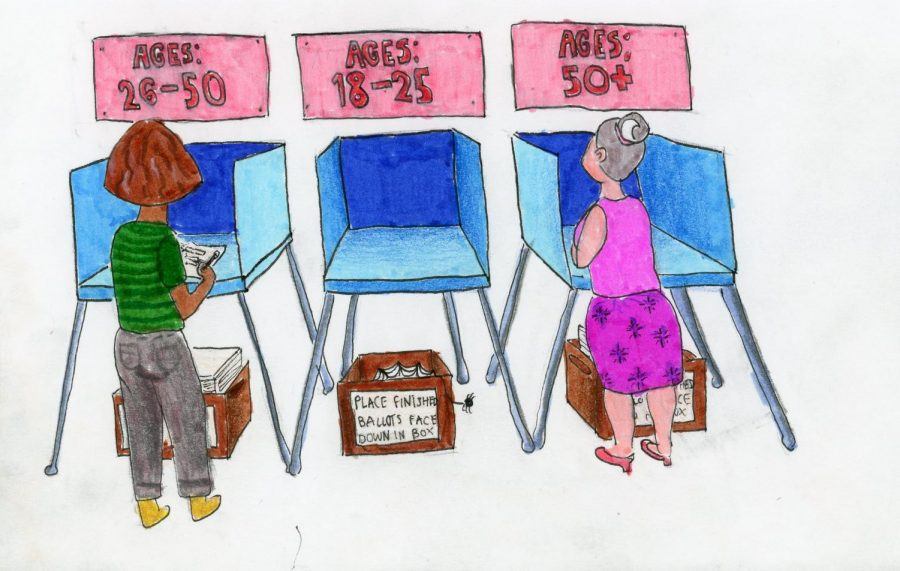
Graphic by Angelina Oliveira