Volunteer with us Today!! We have various dates to choose from Jan 31st | Feb 1st | Feb 27th | Feb 28th | Mar 1st | Sign Up Today!

District 2 & 7

Freshman Mock Trial Team Enjoys Their First Time at District

By Delia Rune, Liberal Arts & Sciences Academy

A new mock trial team from LASA High School is taking on the competition this year at the YMCA Youth and Government (YAG) District Conference. Composed of eight girls, team #209 is excited to experience a YAG trial for the first time. Lilia Marshall, a sophomore at LASA and a lawyer for her team, said the preparation for their first trial has been rigorous.

“We spent a lot of time getting the witnesses ready and coaching them on how to do it,” Marshall said. “We also did a run-through ahead of time, so we could see where the kinks were and adjust timing if we needed to.”

According to Marshall, the most difficult thing about participating in YAG’s judicial section is everything that comes in advance of the trial itself. She explained that not knowing what arguments or questions the other team will ask can be anxiety-provoking. But once the trial starts, things are usually more fun.

“I think the hardest part is getting over nerves,” Marshall said, “Once you’re in there, you’re ready to go… I really love the adrenaline you get during it, being able to argue against other people.”

In mock trial, each team has two lawyers and six witnesses. Sabrine Petusky, a junior at LASA and a witness for Marshall’s trial team, explained that being a witness has a specific set of challenges.

“From a witness standpoint, there’s a lot of memorization, and you have to say the facts in exactly the correct words,” Petusky said, “Often, I’ll have to piece things together in my mind and say how I best remember it.”

Marshall agrees that a lot of what mock trial teaches you is how to organize information in your mind and then deliver it succinctly to an audience. She feels that doing YAG has given her a lot of skills she wouldn’t have gotten otherwise.

“I think [YAG] has mainly taught me how to think on the spot,” Marshall said, “But also how to formulate arguments and shorten what I’m saying into a smaller timespan.”

But according to Petusky, mock trial is not only a learning experience, it’s a lot of fun, too. Getting to think in new ways and meet new people makes the YAG District Conference a very exciting event for first-time participants.

“I love this whole thing, it’s so fun,” Petusky said, “It’s really intellectually stimulating. My favorite part of the trial itself is cross-examination because I’m a witness, but, honestly, I just love everything about it.”

Petusky explained that the community created in judicial is part of what makes mock trial so special. No other sections get to work and prepare with a group of teammates.

“I definitely don’t know everyone, but we’re all talking about our case together, and we’re all communicating and collaborating. It’s just like a really fun community here… it feels like we are all working together as a team to make everything to function.”
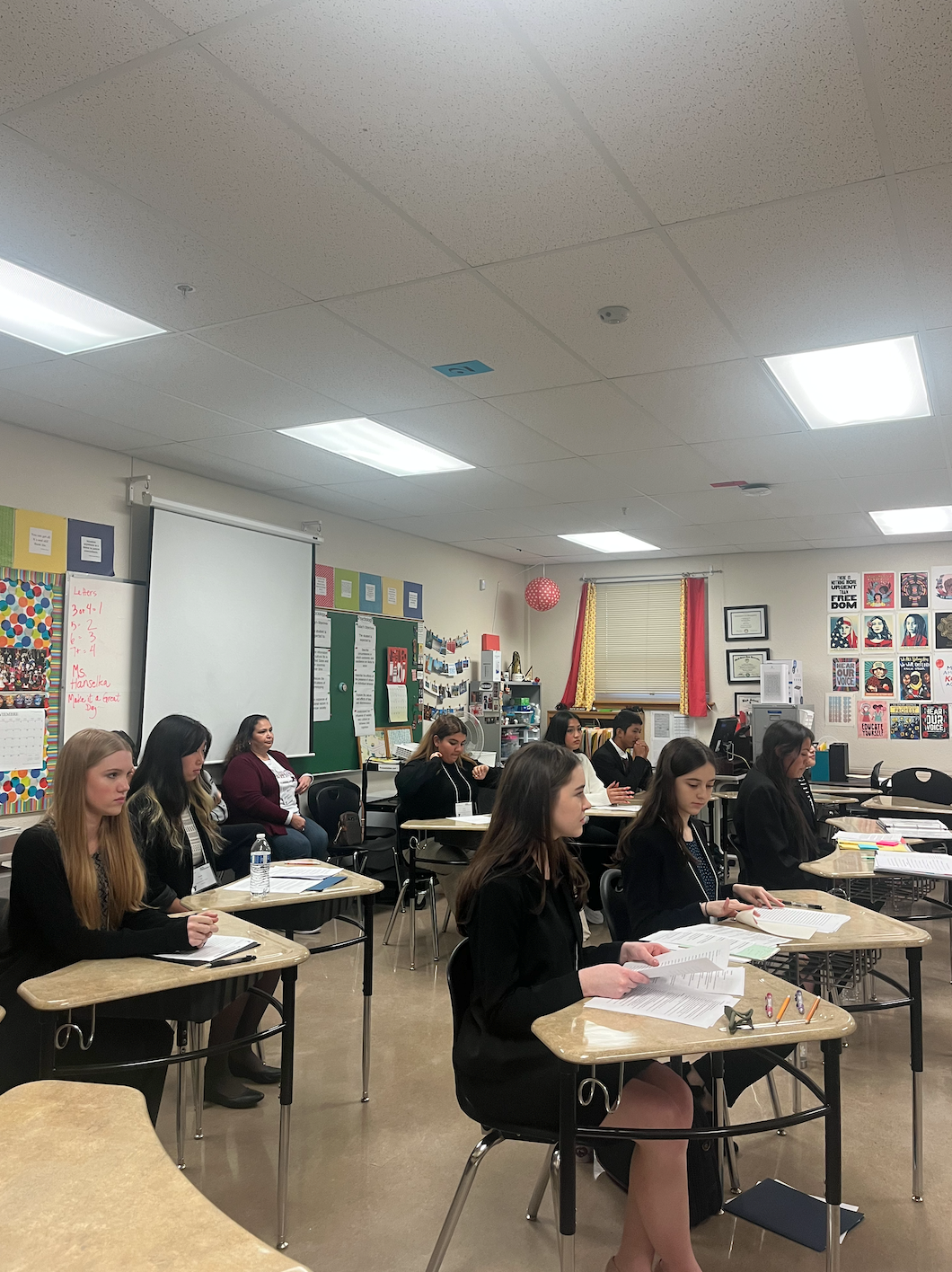
Team 209 prepares for their second trial of the day. Grace O’Bryan and Lilia Marshall, the team’s two lawyers, sit in the front row looking over their oral arguments. 
Legislation Supports ‘Menstrual Rights’ in Texas Middle and High Schools

Written by Abby McAdams, Dripping Springs High School 

“Period poverty,” the lack of menstrual products and education, can become a particularly damaging issue in middle and high schools for students from low-income families, deprioritizing their accessibility, or simply placing a stigma on menstrual cycles. This toxicity is what inspired authors Sophia Apolinar, Desiree Calvio, and Terrycinia Pointer to propose an action to ensure adequate period products are administered in schools through donations and providing information to students.

The authors explained how period poverty impacts women and girls negatively throughout the U.S., even affecting students’ grades and attendance. According to them, “58% of women have felt a sense of embarrassment simply because they were on their period.”

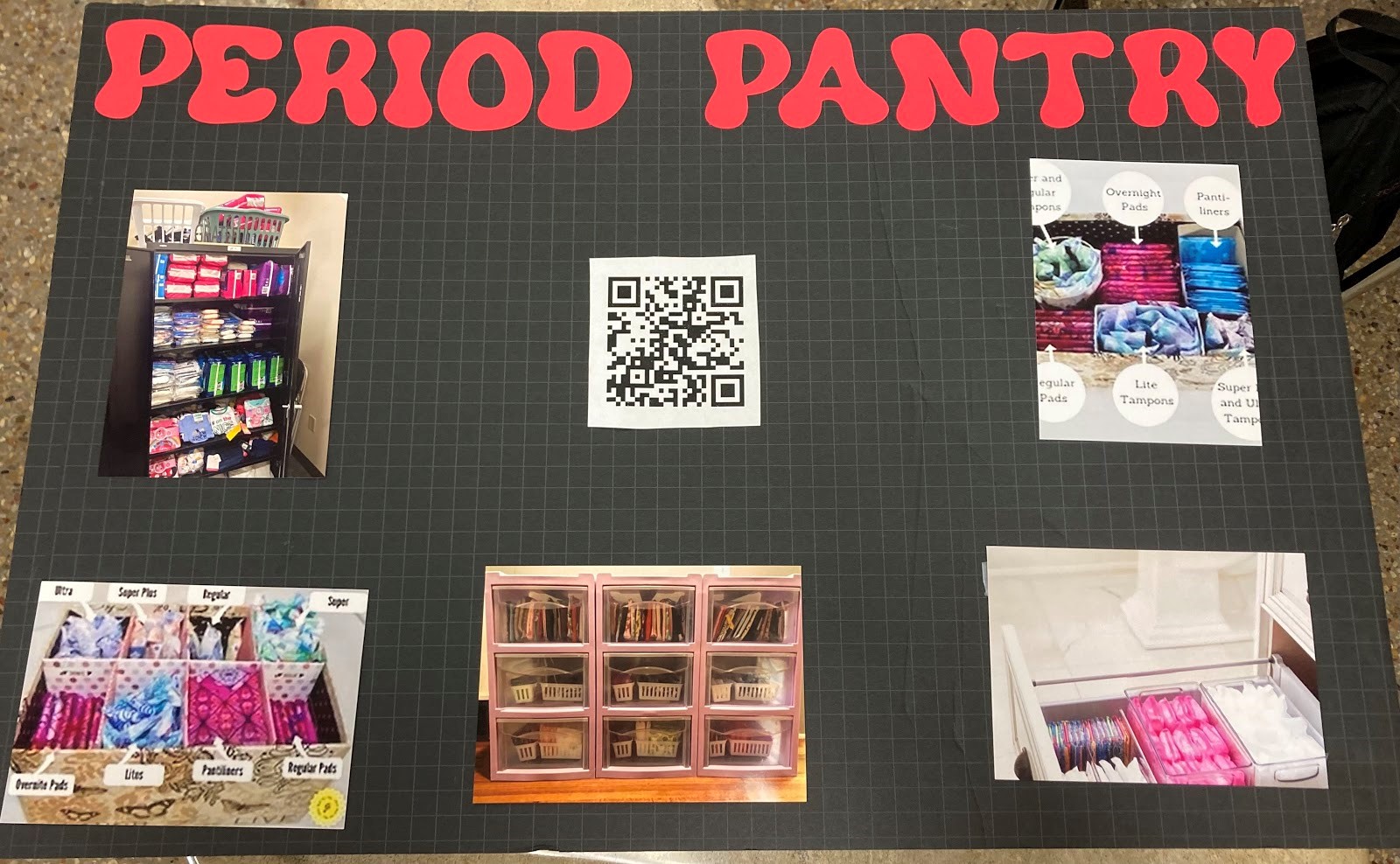
The proposal consists of four major actions: implementing menstrual product-providing Period Pantries in school restrooms; hosting donation drives for products; delivering said products to the restroom pantries; and creating school websites to give students menstrual health information.

Pro Speaker Rowan Dooldeniya clarified her support of the proposed action. She asserted that girls need “to be supported during their menstrual cycles,” and this action would not only provide assistance, but help to destigmatize periods and make the process more comfortable.

But the proposal did not receive the support of every delegate. The Con Speaker argued that school nurse offices already provide menstrual products for students, and that holding schools responsible for having these products at hand “adds burden to the administration” and stress to the school’s budget. In response, the authors claimed that nurse office products were usually in short supply and too general for students with varying ages and period types. The subject of the school’s responsibility for providing menstrual products, however, showed itself to be a prevailing issue, and was elaborated in the amendments.

Angela Mariotti, amendment author for the proposal, stated that schools should provide menstrual products “out of pocket.” In response, Con Speaker Dooldeniya countered that conclusion will strain their budgets, and instead suggested working “through charities which will already provide this service.” A consensus was reached that if donations were insufficient, the school was subsequently responsible for providing products.

The next amendment author, Zoe Moreno, counseled to implement school fundraisers for period products. This suggestion was unanimously supported by the delegates, who agreed it wouldn’t inflict too much stress on the school administration while still being able to support the students.

The proposal was passed unanimously by the committee.

An example of a “Period Pantry” as proposed in the legislation.

Gallego Fights for Justice with Police Brutality Bill

By Spandana Palyam, Liberal Arts & Sciences Academy

“Police should not be able to use excessive force while detaining or questioning suspects,” argues Nick Gallego. To try and address this issue, he proposed a bill today to his committee.

Bill number 12 sheds light on the public view of police brutality. “Police get a lot of leniency,” Gallego says, when it comes to showing unnecessary aggression to the public. This causes a lot of anger and a negative view of the very people that citizens should trust to keep them safe.

Gallego’s proposed bill intends to give a penalty for a peacekeeper being excessively violent. The bill states that if an officer is being overly hostile (unlawful search, over-intimidation, etc.), then they must give two percent of their monthly income to the victim’s family for the rest of their life. If the officer does not comply, then they will face the consequence of getting their peace officer license repealed. This way, the public will know that no one is above the law, and police will also be more careful of overstepping boundaries.

Gallego believes that this bill is a step in the right direction. “This bill will improve society, because if we can lower the amount of police brutality cases, we can help restore faith in the general population of the state of Texas,” he said. Texas ranks second among U.S. states for the number of police brutality killings, and it has only had eight days in all of 2022 without police violence occurring. This excludes the recent riots protesting police actions that have occurred all over the country, which have left Americans screaming and fighting for a change in the law.

Three other legislators in the committee profusely supported the bill. Grace Ford acknowledged that police brutality is a big problem in this country and officers should “face consequences for their actions.” She also said she has faith that this will convey to the public that police will be served justice as well as any other person.

While some say this bill would be helpful and win-win for both sides, others disagree. Committee member Gavin Firestone, a legislator who argued in opposition of the bill, claims that this will cloud an officer’s ability to do their job. In his closing statement, Gallego responded by saying, “The last thing on their mind is protecting their job [while they are on duty]”.

The committee ended with a majority vote towards recommending the bill for Senate action.

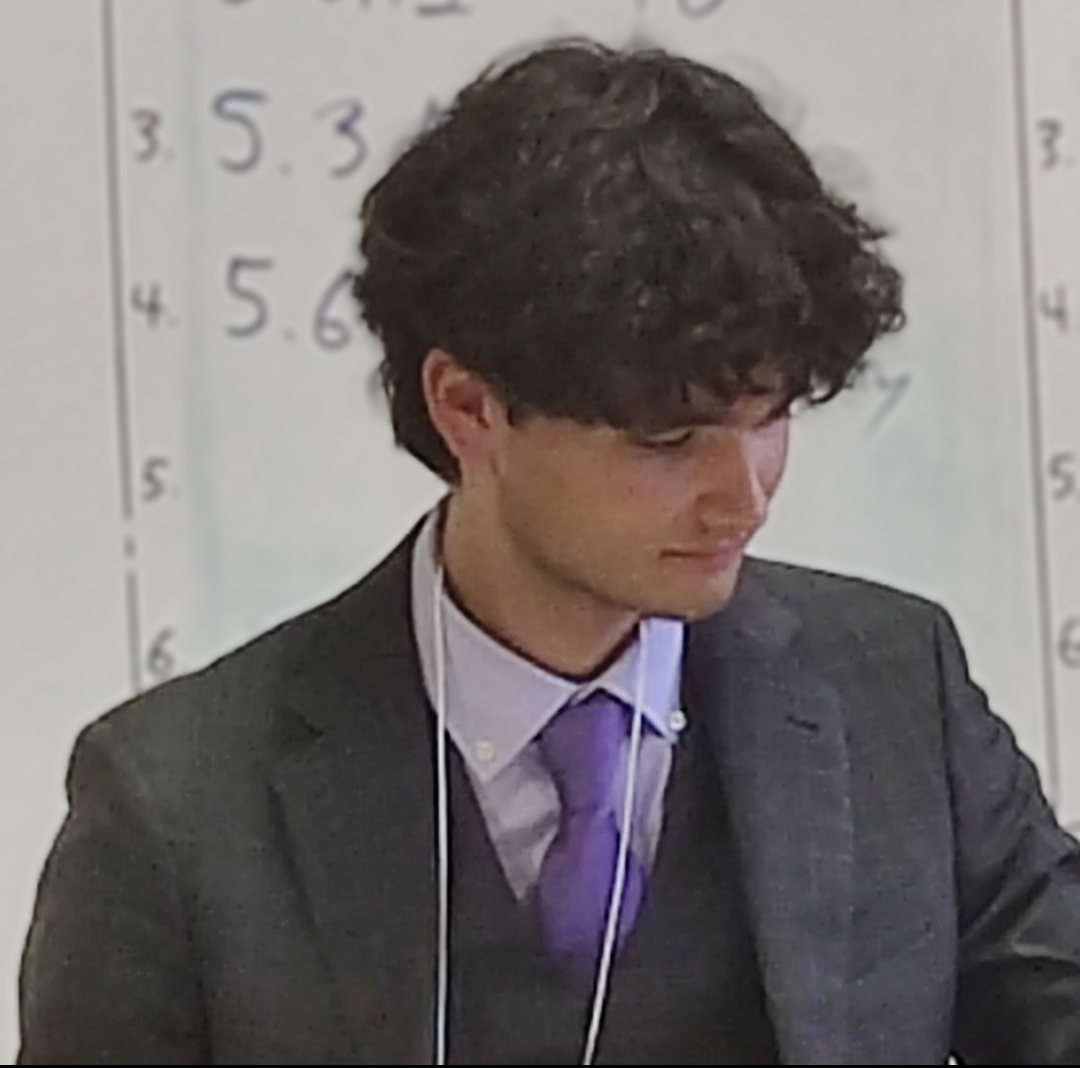
Legislative delegate Nick Gallego listens to debate over his proposed bill.

Go to Top